Protection or Paranoia?
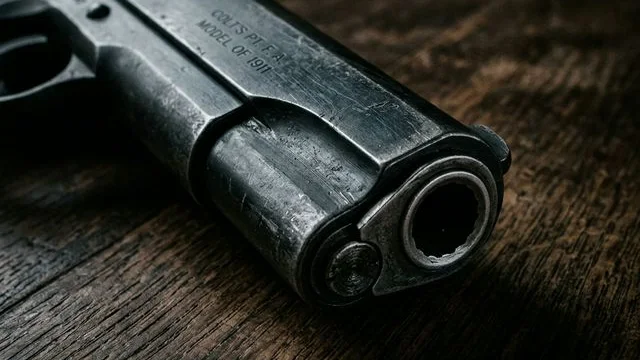
The debate over weapon ownership deeply divides many countries. Supporters argue that the right to self-defence is a basic human freedom, which protects citizens from dangerous and powerful governments. Opponents look at the terrible statistics of gun violence, arguing that easy access to weapons will inevitably lead to tragedy. In this unit, we explore the vocabulary of guns, human rights, and the laws that control them.
- Firearm (noun): A gun that can be carried, like a rifle or a pistol.
- Gun control (noun): Laws that limit who can buy and keep weapons.
- The right to bear arms (noun): The idea that individuals are allowed to own and carry weapons to protect themselves.
1. Raw Vocabulary: The Laws of Force
Practice: Drag the correct term into the policy debate!
1. The man was arrested because it is to carry a gun without permission.
2. Activists are demanding a total on the sale of military guns to civilians.
3. If you want to carry a gun in public, you must apply for an official .
4. He was not sent to prison because the judge decided he only used the gun in .
5. The national rate involving guns has reached a new high this year.
6. The police found the hidden in the suspect's car.
7. The new laws are designed to stop innocent people from becoming a of gun violence.
8. Some people argue that armed citizens are the best way to stop a dangerous .
2. Idioms and Expressions
Because firearms have played such a heavy role in history, many English idioms used in debates come from gun vocabulary.
- "To stick to your guns." To refuse to change your opinion or actions, even if others disagree with you.
- "Up in arms." To be very angry and protesting strongly about something.
- "Caught in the crossfire." To be stuck in the middle of a bad argument between two other people or groups.
- "A smoking gun." A piece of evidence that perfectly proves someone is guilty of a crime.
- "To bite the bullet." To force yourself to do something difficult or unpleasant that you have been avoiding.
3. Reading: The Two Arguments
Read these two different opinions about civilian gun ownership. Notice the use of passive voice and conditionals.
The Advocate for Regulation
"The statistics are a smoking gun. Nations where gun ownership is strictly controlled have much lower murder rates. A total ban on dangerous weapons is not about taking away freedom; it is about public safety. As long as guns are easily available, criminals will continue to buy them, and innocent victims will be caught in the crossfire. If we do not demand a strict license for every purchase, another tragedy is certain to happen."
The Advocate for Ownership
"The right to own guns is a basic defence against bad governments. When the right to self-defence is attacked, people will naturally be up in arms. Taking guns away from honest citizens will not stop criminals, because it is already illegal for them to buy guns. If we ban legal sales, a dangerous black market will be created. We must stick to our guns and ensure that individuals can protect themselves from any threat."
4. Grammar Focus: Modals of Probability
Debates about policy are debates about the future. When arguing, English speakers use specific modal verbs and phrases to show how certain they are that a consequence will happen. You must master these structures to sound natural.
| Level of Certainty | Phrases / Structures | Debate Example |
|---|---|---|
| 100% Certain | - will definitely + verb - is certain to + verb - must (for present deduction) |
"If we ignore the problem, another tragedy is certain to happen." "She must be angry about the new rules." |
| Highly Probable | - is likely to + verb - will probably + verb - should |
"Criminals are likely to find a way around the law." |
| Improbable | - is unlikely to + verb - probably won't + verb - can't (for present deduction) |
"The government is unlikely to take away existing weapons." "That can't be the true reason." |
Pro Tip: Use "is certain to" instead of "will" when you want to sound completely convinced of an outcome in a debate!
Exercise A: Choose the Correct Expression
1. If we don't improve the system, criminals ____________ find a way to buy weapons easily.
2. It is ____________ that banning all guns will anger a large percentage of the population.
Exercise B: Complete the Expressions
Type the missing words to complete these heavy idioms.
1. The public was completely up in when the new tax laws were announced.
2. Despite the intense criticism from the media, the politician decided to stick to his and not change his mind.
5. Debate Support: Prepare Your Arguments
Before you debate, look at these points and use the sentence starters below.
- Fewer guns directly lead to lower national murder rates and less accidents.
- The right to feel safe from violence is more important than owning a weapon.
- Civilians do not need access to high-powered military-style rifles.
- Self-defence from threats is a fundamental human right.
- Criminals will buy guns illegally anyway, so a ban only hurts honest victims.
- An armed public protects a nation against a dangerous and powerful government.
- "It is highly likely that if we ban guns..."
- "You cannot stop a threat without..."
- "The statistics clearly show that..."
- "I stick to my guns on this issue because..."
6. The Hot Seat: Debate Practice 🎙️
- Do you believe the right to bear arms is an old-fashioned idea, or is the right to self-defence a basic human freedom?
- How do illegal gun sales contribute to the high murder rates in certain countries?
- Use Probability: "If the government banned all firearms tomorrow, it is highly likely that..." (Complete the sentence).
- Use Certainty: "Without a strict license system, it is certain to happen that..." (Complete the sentence).
- When people argue about politics, why do innocent people so often get caught in the crossfire?
Dominate the Discussion 🎙️
Don't just nod your head in conversations. Master the advanced phrasing to eloquently defend your opinions in high-level debates.
Come and join me for a bespoke English lesson at nativeuk.com designed specifically to build your conversational confidence.
Book a Private SessionMore Free Topics? 📰
Want to speak clearly about politics, tech, and the modern world? We've got the secret vocabulary you won't find in textbooks.
Check out our Good to Know section and dive into our Blog. You’ll be leading conversations like a native speaker in no time.
Explore Free Resources