Escaping Earth.
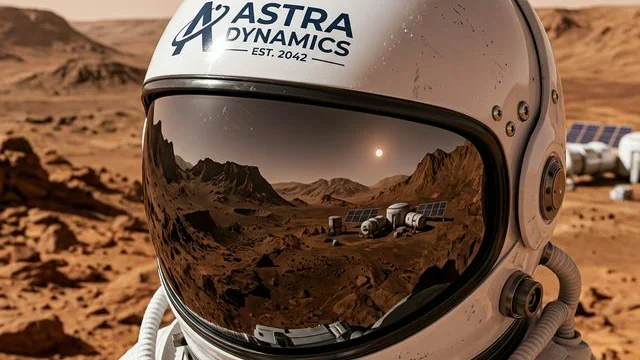
Space exploration was once driven by governments seeking scientific knowledge and national pride. Today, the stars belong to the ultra-rich. Tech billionaires are racing to build commercial rockets, colonize other planets, and mine asteroids for trillions of dollars in rare metals. Is this the necessary next step for human survival, or just the ultimate expression of corporate greed abandoning a dying planet? In this unit, we explore the vocabulary of off-world economics and speculation.
- Privatisation (noun): The transfer of a business, industry, or service from public (government) ownership and control to private corporate ownership.
- Extraterrestrial (adj): Of or from outside the earth or its atmosphere (e.g., extraterrestrial resources).
- Militarization (noun): The process by which a society organises itself for military conflict and violence; the act of placing weapons in space.
1. Raw Vocabulary: The Orbital Gold Rush
Practice: Drag the correct term into the futuristic debate!
1. According to existing international treaties, no single powerful nation can legally claim complete of the Moon.
2. The tech corporation's long-term expensive plan is to bravely travel to Mars and permanently there.
3. If one greedy billionaire completely controls all the new rockets, there will be absolutely no fair in the market.
4. Securely bringing clean water and fresh food to astronauts unfortunately requires incredibly expensive space .
5. Safely living on a strange alien planet clearly means surviving in a very dark, extremely cold, and completely environment.
6. The bold early of deep space was carefully controlled by governments, definitely not rich private companies.
7. The powerful company deeply hopes to clearly make a massive financial from successfully mining the passing asteroid.
8. Liquid water will certainly be the most heavily valuable natural for any future human moon base.
2. Idioms and Expressions
When discussing immense costs, impossible goals, and the unknown, native speakers turn to these evocative phrases.
- "The final frontier." A metaphor for space; the last unknown area of exploration and human expansion.
- "A pipe dream." An unattainable or fanciful hope or scheme; something that will never actually happen.
- "To corner the market." To acquire enough of a particular resource or service to completely control its price and crush all competition.
- "Astronomical." Used to describe an amount, cost, or price that is unimaginably large or high.
3. Reading: The Billionaire's Rocket
Read about the ethical debate over funding the future vs. saving the present.
A famous tech CEO recently announced plans to launch a private rocket to mine an asteroid. Many critics dismissed the announcement as a pipe dream, highlighting the astronomical costs. They argue that this vast resource should be spent combating poverty on Earth, rather than allowing the ultra-rich to explore space for their own profit.
However, supporters argue that near-earth asteroids contain enough rare metals to solve the planet's resource scarcity forever. The fear, though, is that the first company to successfully build transport to these rocks will corner the market and establish total ownership over future industries.
If we allow the final frontier to be sold, we risk destroying any fair competition in space. Critics fear that if humans try to settle on Mars or the Moon without international rules, competing corporations will eventually bring weapons into space to protect their expensive investments from the harsh realities of corporate warfare.
4. Grammar Focus: Conditionals for the Future
When debating situations that haven't happened yet (like colonies on Mars), you must use Conditionals. The First Conditional is for realistic possibilities, while the Second Conditional is for hypothetical or unlikely scenarios.
| Type | Structure | Debate Example |
|---|---|---|
| First Conditional (Real possibility) |
If + Present Simple, ... will + Verb | "If they find water on Mars, they will build a colony." (This is a realistic plan.) |
| Second Conditional (Hypothetical / Unreal) |
If + Past Simple, ... would + Verb | "If a billionaire owned the moon, they would control everything." (This is an imagined scenario to prove a point.) |
Pro Tip: Use the First Conditional to warn people about what *is going to happen*. Use the Second Conditional to explore the extreme ethical consequences of an idea!
Exercise A: Choose the Correct Conditional
1. If private companies ______ international treaties, there will be war in space.
2. If you ______ trapped on a harsh alien planet, you would have zero human rights.
Exercise B: Complete the Expressions
Type the missing words to complete these conversational idioms.
1. The cost to build a functional city on Mars isn't just expensive; the price tag is absolutely .
2. If they are the only company mining platinum, they will completely corner the and dictate the global price.
5. Debate Support: Prepare Your Arguments
Use these points to help you argue either side of the debate.
Argument A: Space Should Be Free for All
- If we allow rich companies to claim ownership of the stars, they will create an unstoppable monopoly.
- Space exploration must remain under the control of democratic governments, not unpredictable billionaires.
- Spending astronomical amounts to settle a dead rock is insulting when Earth is currently dying.
- "If we don't regulate space, they will..."
- "It is extremely dangerous to let corporations..."
Argument B: Privatisation is Necessary
- Governments move too slowly; private competition is the only way innovation actually happens.
- If a company takes the massive financial risk to build transport, they deserve the profit.
- Mining asteroids for their massive resources could permanently solve poverty and pollution on Earth.
- "Without a financial reward, nobody would..."
- "If a company takes the risk, they should..."
6. The Hot Seat: Debate Practice 🎙️
- If a private company spends billions on space transport to mine an asteroid, should they have total ownership over those valuable resources?
- Is settling Mars a vital plan for human survival, or is it a ridiculous pipe dream?
- Use Second Conditional: "If a single wealthy corporation owned a planet..." (Complete the hypothetical consequence).
- If the cost of exploration is astronomical, is it unethical to spend that money in space instead of curing poverty on Earth?
- How can international law guarantee completely fair competition in a incredibly harsh environment where nobody is watching?
Dominate the Discussion 🎙️
Don't just nod your head in conversations. Master the advanced phrasing to eloquently defend your opinions in high-level debates.
Come and join me for a bespoke English lesson at nativeuk.com designed specifically to build your conversational confidence.
Book a Private SessionMore Free Topics? 📰
Want to speak clearly about politics, tech, and the modern world? We've got the secret vocabulary you won't find in textbooks.
Check out our Good to Know section and dive into our Blog. You’ll be leading conversations like a native speaker in no time.
Explore Free Resources