Are You Being Watched?
We voluntarily carry microphones and GPS trackers in our pockets every day. Our faces are scanned at airports, and our purchases are tracked by algorithms. Some argue that mass surveillance keeps us safe from terrorism and crime. Others warn that giving the government and corporations unrestricted access to our data is the first step toward a digital dictatorship. In this unit, we explore the vocabulary of privacy and observation.
- Surveillance (noun): Close observation, especially of a suspected spy or criminal, but now widely applied to the general public.
- Big Brother (noun): A person or organisation exercising total control over people's lives (derived from George Orwell's novel 1984).
- Data mining (noun): The practice of analysing large databases in order to generate new information, often to predict user behaviour or target political advertising.
1. Raw Vocabulary: The Digital Panopticon
Practice: drag a word, or select it and choose a gap.
1. Critics warn that passing this new security law will severely upon our constitutional right to privacy.
2. The social media tracked his searches and immediately began showing him political propaganda.
3. To protect journalists operating in hostile countries, it is vital to all text messages and emails.
4. regimes routinely use mass surveillance to monitor and silence political dissidents.
5. Reading an employee's private medical history without permission is highly .
6. With the rise of , a simple scan of your face can unlock your bank account or track you across a city.
Choose a word, then choose a gap.
2. Idioms and Expressions
When discussing the loss of anonymity and the feeling of being constantly monitored, native speakers use these modern idioms.
- "Nothing to hide, nothing to fear." The common argument used to justify mass surveillance, implying that only criminals should care about privacy.
- "Off the grid." Living without using public utilities or digital networks; completely untrackable by modern technology.
- "A chilling effect." The discouragement of the legitimate exercise of natural and legal rights (like free speech) due to the threat of legal sanction or constant surveillance.
- "Under the microscope." To be watched or examined very closely and critically by the public or the authorities.
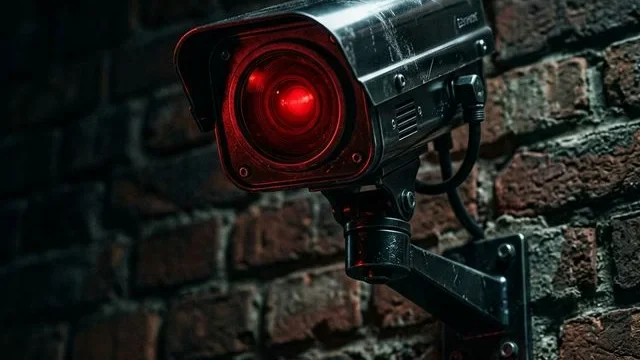
3. Reading: The Transparent Citizen
Read this perspective on the invisible cost of convenience.
When the city installed thousands of facial recognition cameras, the crime rate plummeted. Proponents celebrated, using the classic defence: "If you have nothing to hide, you have nothing to fear." They argued that a bit of intrusive monitoring is a small price to pay for perfectly safe streets.
However, privacy advocates warned of a severe chilling effect. When citizens know they are constantly under the microscope, they change their behaviour. They stop attending peaceful protests. They stop visiting certain clinics. Their lives are dictated by the invisible eye of Big Brother.
Furthermore, the government began selling this biometric data to insurance companies. Suddenly, a citizen's health premium skyrocketed because an algorithm determined they bought fast food too often. To live completely off the grid is now impossible in the modern world, leading many to wonder if we have already handed over our freedom for convenience.
4. Grammar Focus: Double Negatives for Nuance
In standard English, double negatives are usually incorrect (e.g., "I don't have nothing"). However, in advanced academic or political debates, we use a specific type of double negative (Not + Negative Prefix) to express nuance, caution, or a softened certainty.
| Direct Statement (Too blunt) | Nuanced Statement (Double Negative) | Meaning |
|---|---|---|
| It is common for the state to track us. | It is not uncommon for the state to track us. | It happens fairly often; it shouldn't surprise you. |
| It is possible they are listening. | It is not impossible they are listening. | It's a slight possibility; don't rule it out entirely. |
| I am convinced by your argument. | I am not entirely unconvinced by your argument. | You make a fair point, but I'm not 100% agreeing yet. |
Pro Tip: Use this structure when you want to make a claim without sounding like a crazy conspiracy theorist!
Exercise A: Build the Nuanced Statement
1. Instead of saying "It's obvious that corporations sell our data," say:
"It is ____________ that corporations sell our data."
2. Instead of saying "It happens often that apps record our conversations," say:
"It is ____________ for apps to record our conversations."
Exercise B: Complete the Expressions
Type the missing words to complete these conversational idioms.
1. The constant police presence at the protests created a massive effect on free speech.
2. I deleted all my social media accounts and threw away my smartphone; I am living completely off the .
5. The Hot Seat: Debate Practice 🎙️
- How do you respond to the argument: "If you have nothing to hide, you have nothing to fear"? Is privacy only for criminals?
- Do the benefits of catching criminals via facial recognition outweigh the risks of living in a surveillance state?
- Use a Double Negative for Nuance: "When it comes to the government reading my emails, it is not entirely impossible that..." (Complete the thought).
- If an algorithm determines that you are a high-risk individual based on your internet searches, should the police be allowed to investigate you before you commit a crime?
- Will privacy exist in 50 years, or will Big Brother be a permanent, accepted part of daily human life?