Seconds to Midnight.
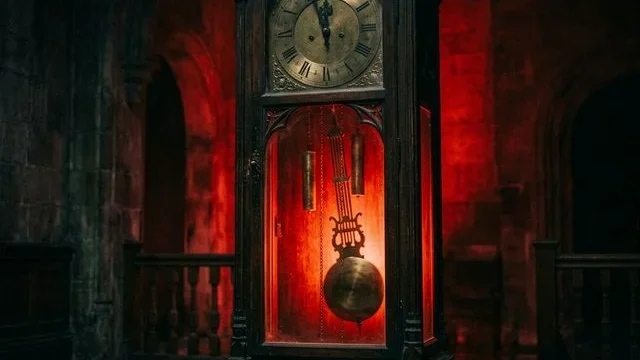
Since 1947, the Bulletin of the Atomic Scientists has maintained the Doomsday Clock—a symbolic timepiece representing how close humanity is to global catastrophe. Today, fueled by the accelerating threat of climate collapse, nuclear proliferation, and unregulated AI, the clock is closer to midnight than ever before in history. In this final unit, we debate whether humanity possesses the collective will to save itself from annihilation.
- Existential threat (noun): A threat to a people's or species' very existence or survival.
- The Doomsday Clock (noun): A symbolic clock representing the likelihood of a human-made global catastrophe; midnight represents global annihilation.
- Tipping point (noun): The critical point in a situation, process, or system beyond which a significant and often unstoppable effect or change takes place.
1. Raw Vocabulary: The End of Days
Practice: drag a word, or select it and choose a gap.
1. The scientific community agrees we are currently standing on the absolute of environmental collapse.
2. If the global temperature rises past the tipping point, the melting of the ice caps will be entirely .
3. A nuclear exchange between the superpowers would result in the complete of modern civilization.
4. Politicians are finally investing billions into flood walls and renewable energy for disaster .
5. The scale of the heatwaves hitting the continent this summer is completely in recorded history.
6. Refusing to transition away from fossil fuels will inevitably lead to a global .
Choose a word, then choose a gap.
2. Idioms and Expressions
When discussing final chances and the ultimate consequences of ignoring warnings, these idioms are highly effective.
- "The eleventh hour." The latest possible moment before it is too late to make a change or prevent a disaster.
- "The point of no return." The moment at which it becomes impossible to change your mind, turn back, or stop a sequence of events.
- "Playing with fire." To take part in a dangerous or highly risky enterprise.
- "A wake-up call." An event that suddenly makes people realise that a problem is incredibly serious and they must take action immediately.
3. Reading: The Midnight Warning
Read about the ultimate warning to humanity.
We have reached the eleventh hour. The Doomsday Clock currently reads 90 seconds to midnight. Scientists emphasise that we are facing an unprecedented convergence of existential threats. Had we listened to the warnings fifty years ago, our oceans would not be dying today.
Some politicians continue to ignore the evidence, believing that economic growth is more important than environmental mitigation. By refusing to act, they are playing with fire. Should we fail to drastically cut emissions, we will pass the tipping point, causing irreversible damage to the biosphere.
The recent extreme weather events should have been a massive wake-up call. We are standing on the brink of annihilation. Were we to unite as a single global community, survival might still be possible, but we are rapidly approaching the point of no return.
4. Grammar Focus: Inverted Conditionals
To end the course, you will master the most dramatic, formal grammar structure in English: Inverted Conditionals. By dropping the word "If" and reversing the subject and the auxiliary verb, your sentences will sound like a powerful political speech or an ancient prophecy.
| Standard 'If' Clause | Inverted Conditional (Formal) | Usage |
|---|---|---|
| If we should fail, humanity will die. | Should we fail, humanity will die. | 1st Conditional: A possible (but unlikely) future event. Drop "If", start with "Should". |
| If the ice were to melt, cities would flood. | Were the ice to melt, cities would flood. | 2nd Conditional: A hypothetical/imagined situation. Drop "If", start with "Were". |
| If they had acted, we would be safe. | Had they acted, we would be safe. | 3rd Conditional: A regret about a past failure. Drop "If", start with "Had". |
Exercise A: Build the Inverted Conditional
1. Formal Regret: If the government had prepared for the disaster, thousands of lives would have been saved.
____________ prepared for the disaster, thousands of lives would have been saved.
2. Dramatic Warning: If humanity should launch nuclear weapons, the planet will become uninhabitable.
____________ nuclear weapons, the planet will become uninhabitable.
Exercise B: Complete the Expressions
Type the missing words to complete these heavy idioms.
1. We cannot delay climate action any longer; it is currently the eleventh .
2. If global temperatures rise another 2 degrees, we will officially pass the point of no .
5. The Final Hot Seat: Debate Practice 🎙️
- Are human beings biologically capable of global cooperation, or does our history of violence mean that our annihilation is inevitable?
- Use an Inverted Conditional (Had...): "Had the politicians listened to the scientists decades ago..." (Complete the sentence).
- When the Doomsday Clock strikes midnight, what do you believe will be the primary cause of the catastrophe: climate collapse, nuclear war, or unregulated AI?
- If the damage to the earth is truly irreversible and we have passed the tipping point, is there any moral obligation left to try and save it?
- Use an Inverted Conditional (Should...): "Should we manage to survive the next century..." (Describe what human society will look like).