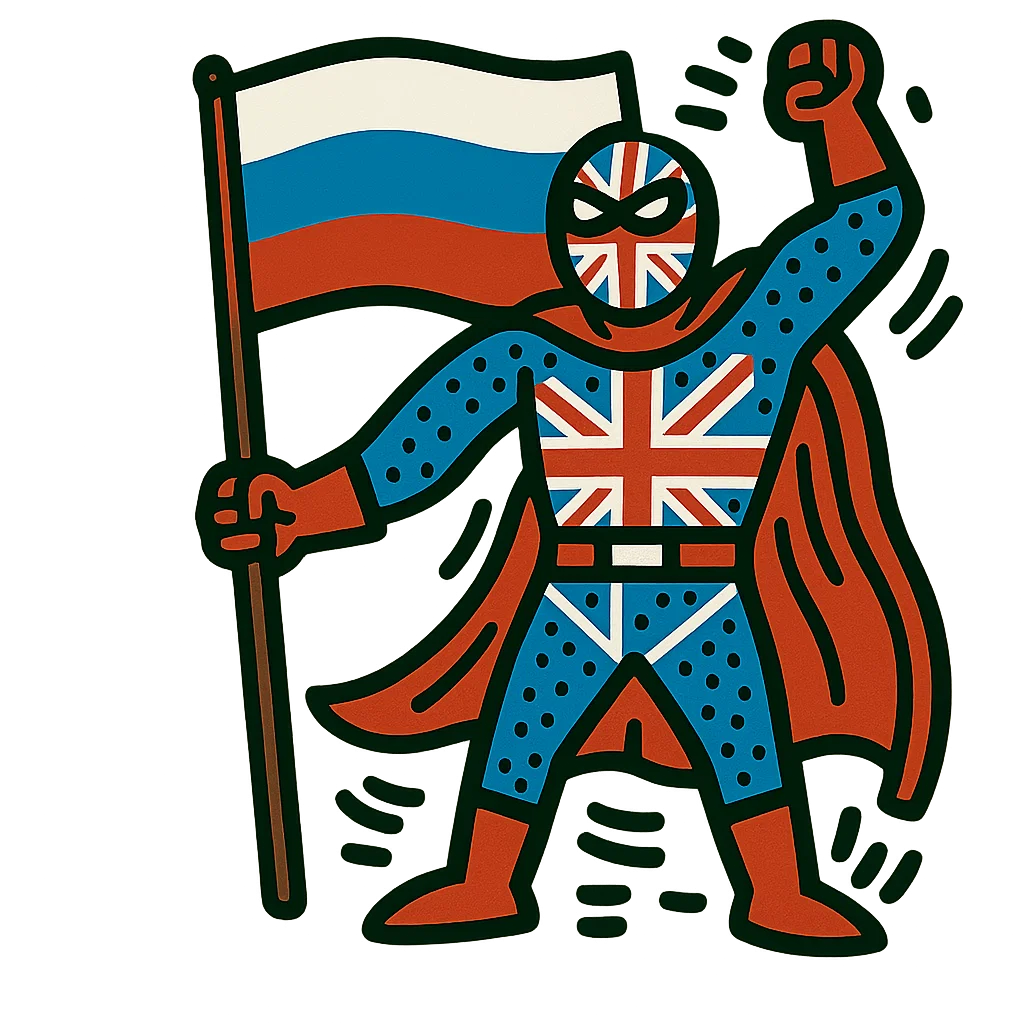
Top 10 Mistakes Russian Speakers Make When Learning English
Russian is a beautiful, complex language, but it's very different from English! Russian speakers often "swallow" articles and use reflexive verbs where English doesn't. Here are the most common mistakes we hear.
Top 10 Mistakes
1
❌ Typical learner sentence:
"I feel myself good today."
🤔 Why learners say this:
In Russian, 'to feel' is reflexive ('chuvstvovat sebya'). In English, we NEVER say 'feel myself' unless it's a doctor's exam!
🇬🇧 What it sounds like to a Brit:
Very awkward! It sounds like you are touching your own body, not talking about your emotions.
✅ Natural English version:
"I feel good today."
2
❌ Typical learner sentence:
"I go to shop." / "I go to bank."
🤔 Why learners say this:
Russian has no articles (a/an/the). Speakers often delete them in English.
🇬🇧 What it sounds like to a Brit:
Like a caveman robot is speaking. "Me go shop."
✅ Natural English version:
"I am going to THE shop."
3
❌ Typical learner sentence:
"How to say...–
🤔 Why learners say this:
Direct translation of 'Kak skazat'. It's missing the subject and auxiliary verb.
🇬🇧 What it sounds like to a Brit:
Like you are reading an instruction manual, not asking a question.
✅ Natural English version:
"How do you say...–
🎯 Practice: Fix the Sentence
"I feel myself tired so I go to bed."
4
❌ Typical learner sentence:
"Please, close the light."
🤔 Why learners say this:
Russian uses 'zakryt' (close) for lights. English uses 'turn off' or 'switch off'.
🇬🇧 What it sounds like to a Brit:
It sounds like you want me to put the lightbulb inside a box and close the lid.
✅ Natural English version:
"Please, turn off the light."
5
❌ Typical learner sentence:
"It depends from the weather."
🤔 Why learners say this:
Russian 'zavisit ot' usually translates to 'from'. English uses 'depends ON'.
🇬🇧 What it sounds like to a Brit:
Just a foreign preposition mistake.
✅ Natural English version:
"It depends on the weather."
6
❌ Typical learner sentence:
"I am agree."
🤔 Why learners say this:
Standard error: 'Ya soglasen' translates to 'I am agree'.
🇬🇧 What it sounds like to a Brit:
Grammatically painful! Agree is a verb, not an adjective here.
✅ Natural English version:
"I agree."
🎯 Practice: Which Word?
You want to make the room dark. You say:
A) Close the light
B) Turn off the light
7
❌ Typical learner sentence:
"I went to a club with friends." (Pronounced 'vith')
🤔 Why learners say this:
Russian lacks the 'W' sound, so speakers use 'V'.
🇬🇧 What it sounds like to a Brit:
The 'V' sound makes you sound like a vampire! "I vant to go." Round your lips for 'W'.
✅ Natural English version:
"I went to a club with friends." (Round lips!)
8
❌ Typical learner sentence:
"I have a normal life."
🤔 Why learners say this:
In Russian, 'normalno' means 'fine' or 'okay'. In English, 'normal' means 'standard/average'.
🇬🇧 What it sounds like to a Brit:
It sounds like you are saying "My life is not weird," which is a strange thing to say!
✅ Natural English version:
"I have a good life." / "Life is fine."
9
❌ Typical learner sentence:
"I called to him."
🤔 Why learners say this:
Russian 'zvonit komu-to' uses a preposition. English 'call' takes the person directly.
🇬🇧 What it sounds like to a Brit:
Like you stood on a mountain and shouted his name, rather than using a phone.
✅ Natural English version:
"I called him."
10
❌ Typical learner sentence:
"For what– (Intonation dropping)
🤔 Why learners say this:
Direct translation of 'Zachem'. But Russian intonation goes down, which sounds rude in English.
🇬🇧 What it sounds like to a Brit:
It sounds very aggressive! Like you are challenging me to a fight.
✅ Natural English version:
"What for– or simply "Why–
🎯 Practice: Fix the Sentence
"How to say this word–
Ready to Perfect Your English?
English lessons online with a native English speaker on Zoom, Teams, and Google Meet
Let's SPEAK English!