Top 10 Mistakes Spanish Learners Make When Learning English
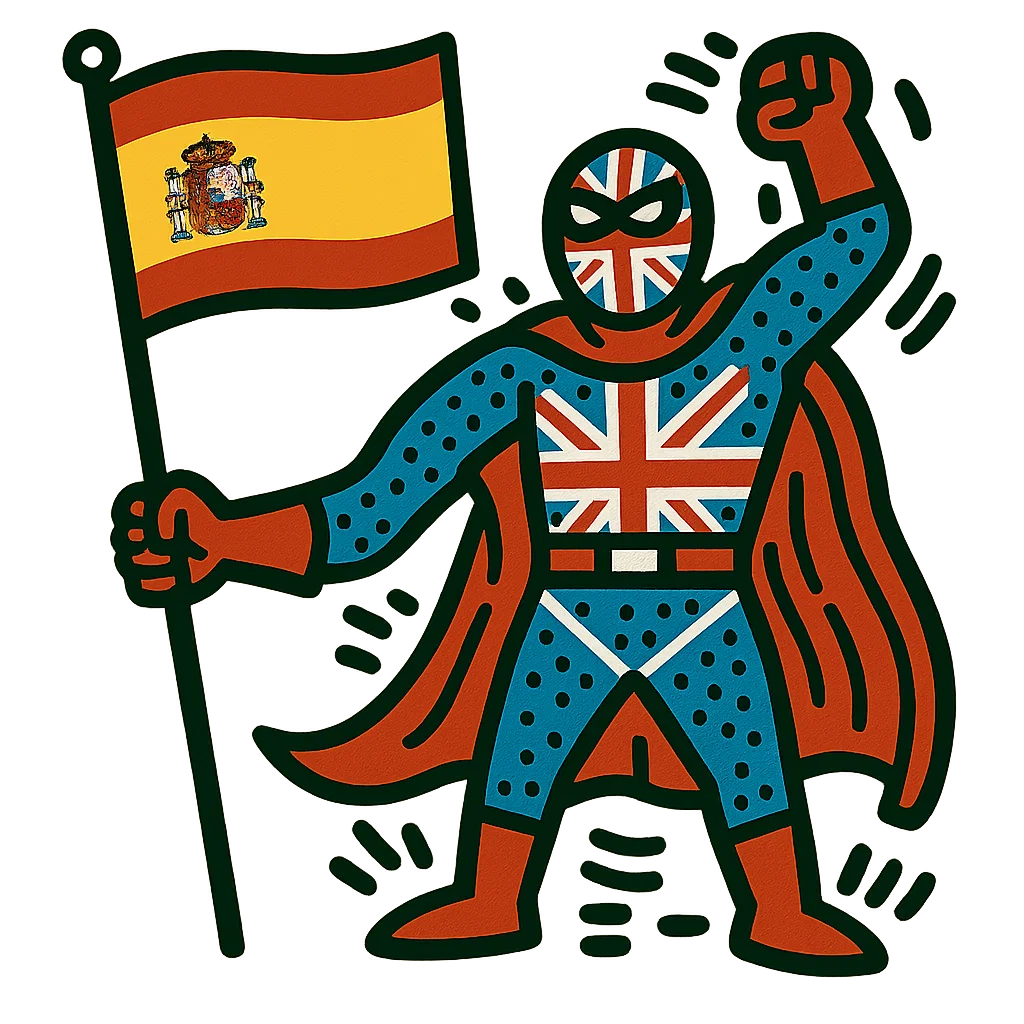
Spanish learners often directly translate from Spanish (Castilian) to English, which leads to some very specific "Spanglish" errors. Here are the top 10 mistakes native Spanish speakers make, explained with a bit of British humour.
Don't worry if you make these—almost every Spanish speaker does! Recognising them is the first step to fixing them.
Top 10 Mistakes
1
❌ Typical learner sentence:
"I have 30 years."
🤔 Why learners say this:
In Spanish, you say 'Tengo 30 años' (I possess 30 years), but in English, age is a state of being.
🇬🇧 What it sounds like to a Brit:
Like you have 30 calendar years collected in your pocket.
✅ Natural English version:
"I am 30 years old."
2
❌ Typical learner sentence:
"People is very crazy today."
🤔 Why learners say this:
In Spanish, 'la gente' is a singular noun (es), but 'people' in English is always plural.
🇬🇧 What it sounds like to a Brit:
Grammatically painful! It sounds like you are calling 'People' a single person's name.
✅ Natural English version:
"People are very crazy today."
3
❌ Typical learner sentence:
"I am agree with you."
🤔 Why learners say this:
Spanish uses 'Estoy de acuerdo' (I am in agreement), so learners incorrectly add 'am'.
🇬🇧 What it sounds like to a Brit:
Like 'Agree' is your name, or it's a feeling you have inside you.
✅ Natural English version:
"I agree with you."
🎯 Practice: Fix the Sentence
"The people in Madrid is very friendly."
4
❌ Typical learner sentence:
"I lost the bus."
🤔 Why learners say this:
Spanish 'perder' means both to misplace (lose) and to not catch (miss).
🇬🇧 What it sounds like to a Brit:
Like you owned the bus, put it somewhere, and now you can't find it!
✅ Natural English version:
"I missed the bus."
5
❌ Typical learner sentence:
"Is very important to sleep well."
🤔 Why learners say this:
Spanish often drops the subject ('Es muy importante'), but English ALWAYS needs a subject.
🇬🇧 What it sounds like to a Brit:
Like a robot speaking. We are waiting for you to say WHO or WHAT is important.
✅ Natural English version:
"It is very important to sleep well."
6
❌ Typical learner sentence:
"I am very boring at home."
🤔 Why learners say this:
Confusion between 'estoy aburrido' (bored) and 'soy aburrido' (boring).
🇬🇧 What it sounds like to a Brit:
You are insulting yourself! You are saying that you are a dull person with no personality.
✅ Natural English version:
"I am very bored at home."
🎯 Practice: Which Sounds Natural?
Your friend tells a great joke. You say:
A) He is very fun!
B) He is very funny!
7
❌ Typical learner sentence:
"I want that you come to my party."
🤔 Why learners say this:
Direct translation of the Spanish subjunctive 'Quiero que vengas'.
🇬🇧 What it sounds like to a Brit:
Very old-fashioned and clunky. Like you are reading from a legal document.
✅ Natural English version:
"I want you to come to my party."
8
❌ Typical learner sentence:
"Please explain me this rule."
🤔 Why learners say this:
In Spanish 'explicarme' works, but in English 'explain' requires 'to' before the person.
🇬🇧 What it sounds like to a Brit:
Like you want me to describe you! "Okay, you are tall, you have dark hair..."
✅ Natural English version:
"Please explain this rule to me."
🎯 Practice: Fix the Sentence
"Is raining a lot today."
9
❌ Typical learner sentence:
"The life is beautiful."
🤔 Why learners say this:
Spanish uses articles for general nouns (La vida), but English drops 'the' for general concepts.
🇬🇧 What it sounds like to a Brit:
Like you are talking about a specific board game called 'Life', not life in general.
✅ Natural English version:
"Life is beautiful."
10
❌ Typical learner sentence:
"Thanks for to help me."
🤔 Why learners say this:
Spanish uses the infinitive after prepositions (por ayudar), but English uses the -ing form.
🇬🇧 What it sounds like to a Brit:
Very broken. Prepositions (for, of, about) are always followed by -ING verbs.
✅ Natural English version:
"Thanks for helping me."
🎯 Practice: Which Sounds Natural?
Which sentence is correct?
A) I want that you help me
B) I want you to help me
Ready to Perfect Your English?
English lessons online with a native English speaker on Zoom, Teams, and Google Meet
Let's SPEAK English!