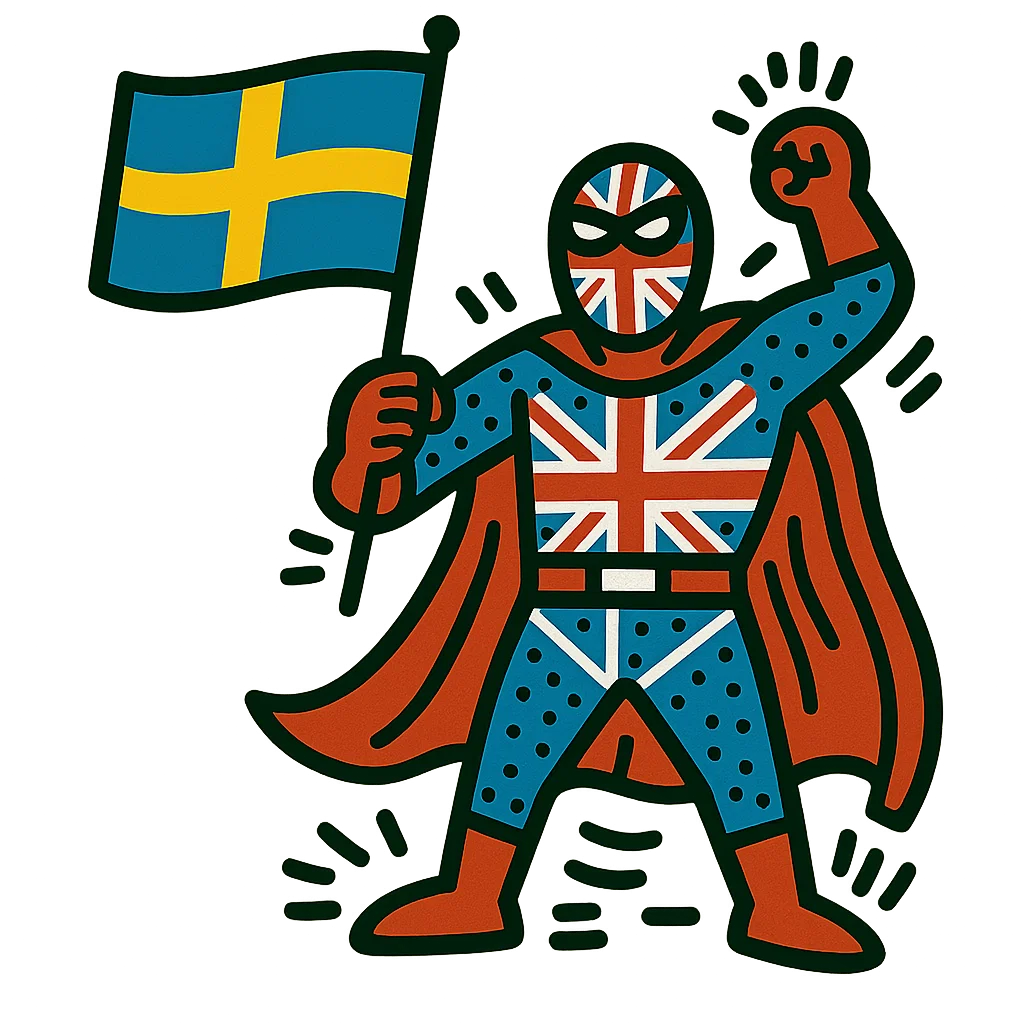
Top 10 Mistakes Swedish Learners Make When Learning English
Swedes are excellent English speakers, often sounding almost native! But there are specific "Swenglish" mistakes—usually false friends—that give you away. Here are the top errors.
Top 10 Mistakes
1
❌ Typical learner sentence:
"He learned me to drive."
🤔 Why learners say this:
In Swedish, 'lära' means both to learn (absorb knowledge) AND to teach (give knowledge). English separates them!
🇬🇧 What it sounds like to a Brit:
Very uneducated. Only you can learn. Someone else TEACHES you.
✅ Natural English version:
"He taught me to drive."
2
❌ Typical learner sentence:
"We can eventual go there later."
🤔 Why learners say this:
FALSE FRIEND! 'Eventuellt' means 'Possibly/Maybe'. English 'Eventually' means 'Finally, after a long time'.
🇬🇧 What it sounds like to a Brit:
Like you are planning to go there in 10 years time.
✅ Natural English version:
"We can possibly go there later."
3
❌ Typical learner sentence:
"I am boiling coffee."
🤔 Why learners say this:
Swedish 'koka kaffe'. English uses 'make', 'brew', or 'put on'.
🇬🇧 What it sounds like to a Brit:
Like you are a witch making a potion in a cauldron!
✅ Natural English version:
"I am making coffee."
🎯 Practice: Which Word?
You want to help your friend understand math. You say:
A) I will learn you math
B) I will teach you math
4
❌ Typical learner sentence:
"It was fun to see him." (Meeting a friend)
🤔 Why learners say this:
Swedish 'roligt' (fun) is used for 'nice/pleasant'. In English, 'fun' implies a game or laughter.
🇬🇧 What it sounds like to a Brit:
A bit strange for a quiet coffee. Use 'Nice' or 'Great'.
✅ Natural English version:
"It was nice to see him."
5
❌ Typical learner sentence:
"I have painful in my arm."
🤔 Why learners say this:
Direct translation of 'ont'. English uses 'pain' (noun) or 'hurts' (verb).
🇬🇧 What it sounds like to a Brit:
Broken English. You can't "have" an adjective.
✅ Natural English version:
"I have a pain in my arm." / "My arm hurts."
6
❌ Typical learner sentence:
"I want to taste to play tennis."
🤔 Why learners say this:
Swedish 'prova på' (test/try). 'Taste' is ONLY for food in English.
🇬🇧 What it sounds like to a Brit:
Like you want to lick the tennis racket!
✅ Natural English version:
"I want to try playing tennis."
🎯 Practice: Fix the Sentence
"We can eventual meet next week."
7
❌ Typical learner sentence:
"I took the chance to kiss him."
🤔 Why learners say this:
Swedish 'chans' vs 'möjlighet'. A 'Chance' is luck/risk. An 'Opportunity' is a situation you use.
🇬🇧 What it sounds like to a Brit:
It sounds a bit risky. 'Opportunity' sounds more positive and planned.
✅ Natural English version:
"I took the opportunity to kiss him."
8
❌ Typical learner sentence:
"Let's sit in the shadow."
🤔 Why learners say this:
Swedish 'skugga' covers both. English: 'Shadow' is the shape on the ground. 'Shade' is the cool area protected from sun.
🇬🇧 What it sounds like to a Brit:
Like you want to sit on top of the dark shape on the floor.
✅ Natural English version:
"Let's sit in the shade."
9
❌ Typical learner sentence:
"Details are in the biff."
🤔 Why learners say this:
Modern Swenglish! 'Bifogad fil' (attachment). Swedes sometimes shorten it or mix it up.
🇬🇧 What it sounds like to a Brit:
Like the details are inside a steak (Beef)!
✅ Natural English version:
"Details are in the attachment."
10
❌ Typical learner sentence:
"I feel myself happy."
🤔 Why learners say this:
Reflexive verbs. Swedish 'känna sig'. English just uses 'feel' + adjective.
🇬🇧 What it sounds like to a Brit:
Like you are physically touching your body.
✅ Natural English version:
"I feel happy."
🎯 Practice: Fix the Sentence
"Can you learn me to boil coffee–
Ready to Perfect Your English?
English lessons online with a native English speaker on Zoom, Teams, and Google Meet
Let's SPEAK English!