
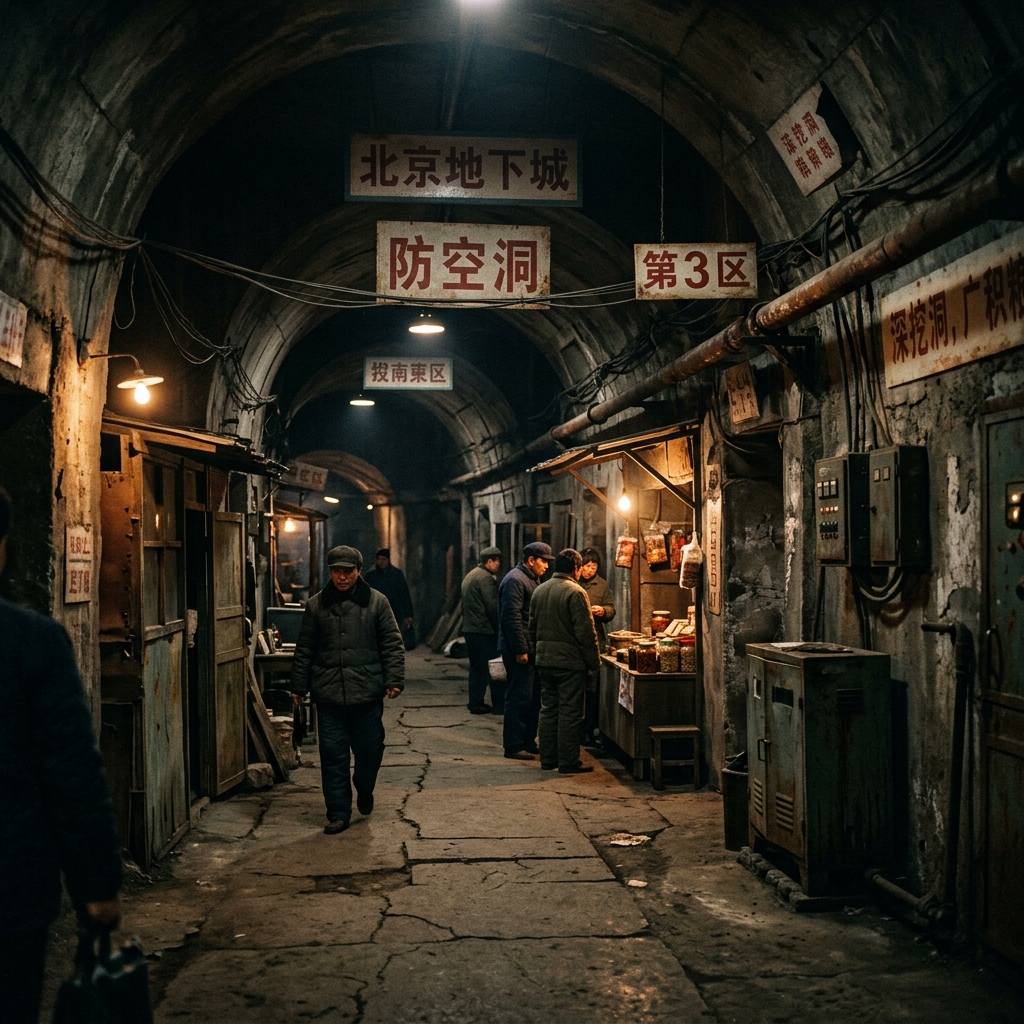
Beneath the modern, brightly lit skyscrapers and incredibly busy streets of Beijing lies a deeply hidden, heavily forgotten world. During the intense political paranoia of the 1970s, the Chinese government ordered the massive construction of Dixia Cheng—a highly secretive, colossal underground city designed to protect millions of residents from an imminent nuclear strike. Today, it remains one of the most fascinating architectural mysteries on the planet.
Spanning an unbelievable 33 square miles, the dark, damp network of heavily reinforced concrete tunnels was largely dug completely by hand. Hundreds of thousands of ordinary local citizens, including young schoolchildren, violently toiled away in absolute secrecy to build the massive shelters directly beneath their own homes. The massive complex was brilliantly designed to be completely self-sufficient.
If the dreaded air raid sirens ever heavily sounded, the city was perfectly equipped to comfortably house the population for several months. Deep underground, researchers have found perfectly preserved medical clinics, massive movie theatres, fully functional roller-skating rinks, and huge underground restaurants. It was a complete shadow city, completely isolated from the terrifying nuclear threat above.
Our investigative team was granted highly exclusive access to a newly opened section of the tunnels. Walking through the incredibly narrow, dimly lit corridors immediately sends shivers down your spine. The thick, heavy steel blast doors still proudly remain on their rusted hinges, heavily serving as a chilling reminder of how incredibly close the world came to total nuclear destruction.
"It feels exactly like walking through a heavily frozen time capsule," explained Dr. Wei, a local historian who studies the Cold War era. "You can still see perfectly painted propaganda posters heavily flaking off the damp walls, and wooden bunk beds completely rotting in the darkness. It is deeply haunting to stand in a cinema built for a nuclear apocalypse."
Because the feared nuclear war thankfully never happened, the massive underground city was eventually heavily abandoned by the government. However, over the past few decades, large sections of the upper tunnels have been quietly taken over by migrant workers migrating to the expensive capital. Unable to afford the massive rents above ground, thousands of people—commonly known locally as the 'Rat Tribe'—now proudly live in the tiny, windowless bunkers.
While the local government is now aggressively trying to permanently seal off the remaining deep residential sections due to severe fire hazards, a few specific tunnels have been officially transformed into highly popular tourist museums. These dark, silent spaces brilliantly offer a deeply sobering, powerful look into an incredibly tense era of modern history.
The Underground City perfectly stands as an incredible monument to extreme human endurance and deep fear. It is a completely silent reminder that sometimes, the most incredible architectural achievements are aggressively hidden directly beneath our feet.
💬 Reader Comments
Loading comments...