
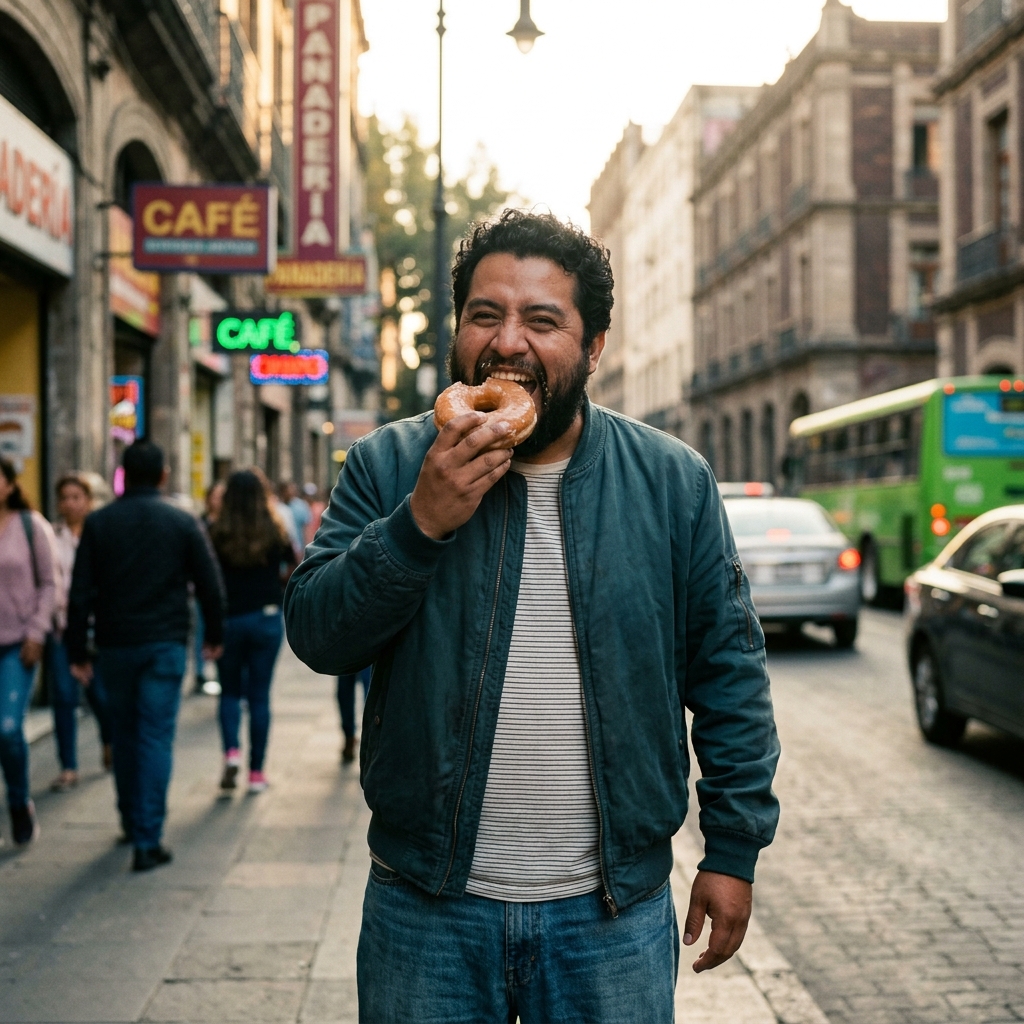
Two years ago, a cheerful 35-year-old named Alejandro became a national sensation when he competed on Mexico's hit reality television show, 'The Biggest Battle'. Having entered the competition weighing over 150 kilograms, he earned the endearing nickname 'Doughnut Man' due to his absolute love for sugary bakery treats. Over six grueling months, Alejandro inspired millions by shedding half of his body weight, winning the grand cash prize, and securing a seemingly miraculous physical transformation.
After his victory, Alejandro toured the country as a motivational speaker, promoting strict diet plans and intense daily workout regimes. However, the fairytale ending was shattered this weekend when paparazzi photos surfaced online. Alejandro was photographed lounging at a luxury resort in Cancun, eating a large plate of fried pastries. The photos clearly revealed that he had completely regained every single kilo he had lost during the television production.
"I honestly couldn't believe my eyes when I saw him ordering dessert by the pool," commented a tourist named Sofia, who snapped one of the viral pictures and posted it to social media. "He was our biggest inspiration on the show, and now he looks exactly like he did on day one. It feels like the whole television journey was totally fake."
"The reality show put us on absolute starvation diets and forced us to exercise for eight hours a day," Alejandro confessed in a tearful Instagram live video addressing the controversy. "It was completely unsustainable in the real world. The moment the cameras stopped rolling and I returned to my normal office job, my body just gave up. The public pressure to stay thin was destroying my mental health, so I chose my happiness over a completely artificial television standard."
The viral photos have caused a massive divide online. While some disappointed viewers are feeling deeply betrayed by his relapse, medical professionals are using the incident to highlight the dangers of rapid, entertainment-based weight loss. They argue that these programs represent a highly exploitative industry that sets contestants up for inevitable failure once they are no longer under intense public scrutiny.
"This is a classic, tragic example of severe metabolic adaptation," explained Dr. Elena Vargas, a prominent nutritionist in Mexico City. "When you force the body to shed mass that quickly, it fights back aggressively. Human bodies are designed to fluctuate naturally, and the deceptive editing of television shows never addresses the psychological trauma involved. Maintaining that extreme lifestyle requires incredible mental resilience."
Alejandro's story serves as a powerful reminder that weight loss is rarely a simple, linear journey. As the debate over reality television ethics continues, many fans are urging the public to treat these individuals with compassion rather than demanding perfection for the sake of entertainment.
💬 Reader Comments
Loading comments...