
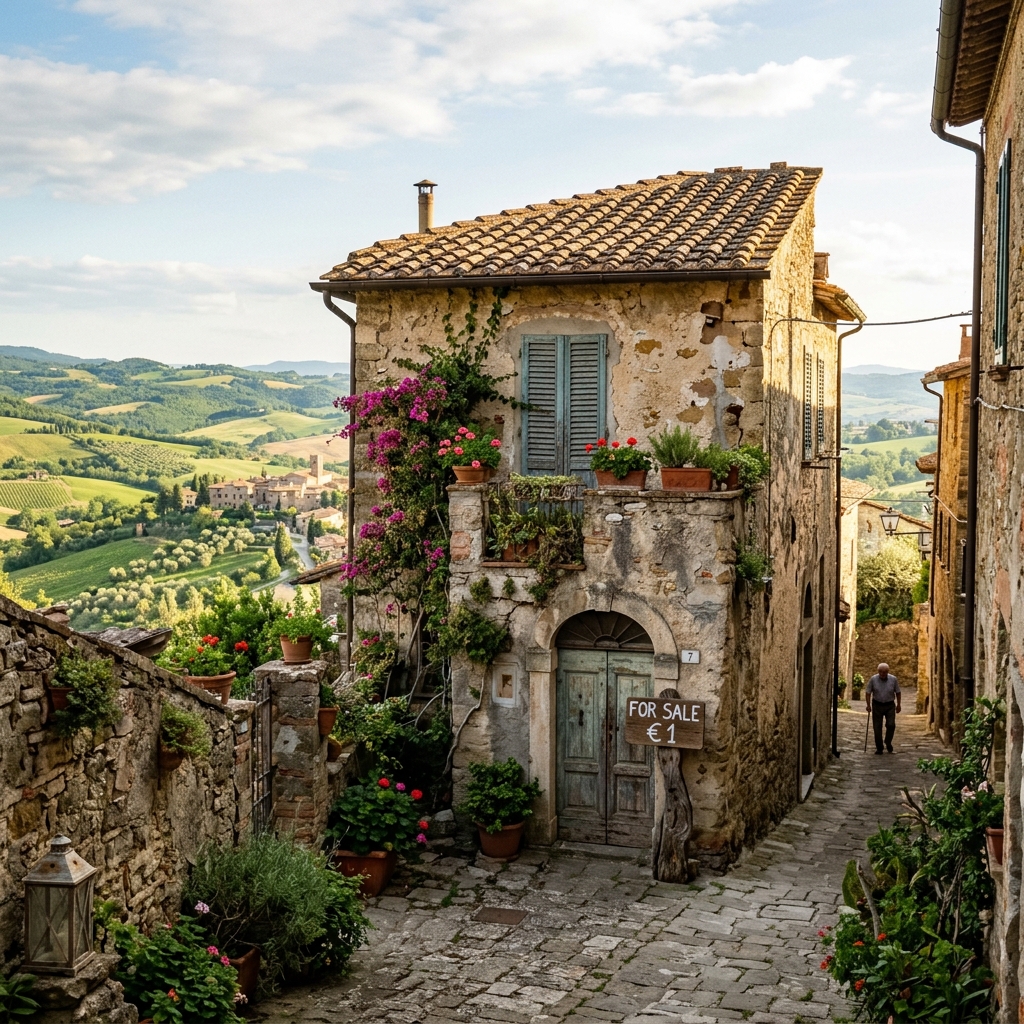
Across Italy, hundreds of historic villages are facing a "silent crisis." As young people move to big cities for work, these ancient towns are being left empty, with beautiful stone villas falling into ruin. To combat this, several mayors have launched an audacious plan to sell abandoned properties for just €1. The goal is to attract new residents, boost the local economy, and save the town's cultural heritage before it disappears forever.
While the initial purchase price is nominal, the commitment required to restore these properties is anything but small. Buyers must agree to renovate the homes within a specific timeframe, usually three years, and must prove that they have the hefty funds required to bring these historic buildings back to life. It's a massive investment that requires a lot of hard work and a very good toolkit.
The scheme has been a massive global success, attracting buyers from the USA, China, and the UK. Some have turned their €1 ruins into luxury holiday homes, while others have moved permanently to start a new life. However, it’s not always a dream experience. Renovating a historic building in a foreign country involves a huge amount of bureaucracy, and finding local builders who can navigate the narrow, winding streets can be a nightmare. It is extraordinary how much work it takes to bring these old houses back to life.
Despite the challenges, the One-Euro movement continues to grow. For the villages, it has brought a new lease of life, with shops and cafes reopening to serve the new international residents. For the buyers, it offers a chance to own a piece of history and live the dolce vita for a fraction of the cost of a London flat. It’s a bold experiment in social engineering that proves that with a bit of creativity and a lot of hard work, even the most broken town can have a bright future.
However, the real test for these new Italians comes when the initial excitement wears off and the daunting reality of renovation sets in. Dealing with local councils can be a slow and frustrating process, and many find that the One-Euro price tag is just the tip of a very expensive iceberg. From structural issues hidden for decades to the challenge of finding reliable plumbers in a remote village, the road to the dolce vita is paved with unexpected bills and massive stress. Yet, for those who persevere, the reward is more than just a house; it's a deep connection to a community that is desperate to welcome them home.
In the end, the success of the project will not be measured in Euros, but in the children playing in the streets and the return of local services. If the One-Euro homes can turn these ghost towns back into living, breathing communities, then the ambitious idea will have been a stroke of genius. For now, the world continues to watch as Italy tries to save its future by selling its past, one stone at a time. It's a surreal world sometimes, but in the sun-drenched hills of Sicily, it’s a world that is finding its voice again. We might even see a significant price rise in the years to come if the trend continues!
Ultimately, this isn't just about real estate; it's about the survival of a way of life that has existed for centuries. The villages are the heartbeat of Italy, and without them, the country would lose its soul. Whether the One-Euro plan is a long-term solution or just a temporary fix remains to be seen, but for now, it's a story of hope, hard work, and the belief that anything can be rebuilt if you have enough passion and a very big hammer. It's a challenging journey for everyone involved, and one that we will be following closely for years to come.
💬 Reader Comments
Loading comments...