
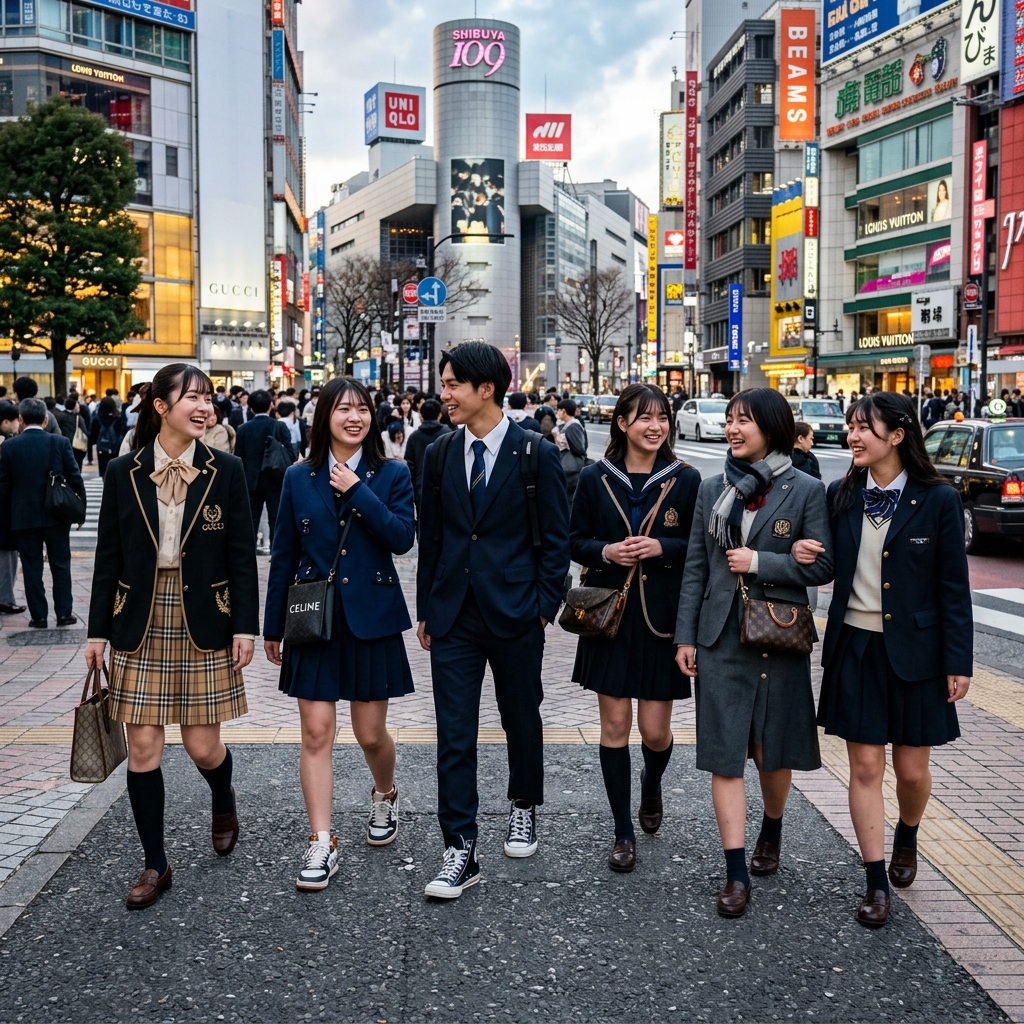
School uniforms have long served as a vital tool to promote social equality, ensuring that students can focus entirely on learning without facing peer pressure over clothing. However, a highly controversial policy change at a prestigious public elementary school in Tokyo's upscale Ginza district has completely subverted this tradition. The administration has officially mandated an exclusive, luxury designer uniform package, hitting working families with a staggering 400-dollar bill per child.
The high-end wardrobe, designed in collaboration with an elite global luxury fashion house, replaces the school's standard, budget-friendly attire with custom-tailored navy blazers, structured wool caps, and designer bags. School administrators fiercely defended the aggressive branding campaign, arguing that Ginza is a historic center of global luxury culture and that the children should dress to reflect the community’s elite identity. However, local education boards have heavily condemned the decision as a deeply elitist move that completely alienates average citizens.
The sudden price surge has triggered immediate financial anxiety among families, many of whom saved for years specifically to enroll their children in the high-achieving academy. "I felt completely sick when I received the pricing catalog," explained local mother Yuka during a public meeting at the town hall. "To tell a six-year-old child that they cannot attend classes unless their parents buy luxury designer labels is fundamentally absurd and incredibly cruel. The school should be teaching community values, not corporate brand worship."
"The decision to introduce high-fashion tailoring was intentionally made to prepare our students for leadership roles in a highly competitive global environment," stated the principal during a tense press conference. "A school’s uniform isn't just basic clothing; it is a vital visual reflection of institutional excellence and meticulous standards. Our requirements are admittedly rigid, but a high-end image is crucial to maintain our standing as a top-tier academy. We have absolutely no intention of backing down."
While school leaders remain entirely unapologetic about their design choices, the policy has left poorer families incredibly vulnerable to social exclusion. Critics point out that children whose parents struggle to afford replacement sets will be immediately obvious to peers, making them easy targets for playground bullying. Parents argue it is impossible to distinguish between an educational center and a commercial runway when the basic cost of entry is tied to an expensive fashion label.
Despite the massive wave of public backlash and negative commentary on social media, the school board's code remains completely unchanged. The luxury crisis highlights a growing, highly contentious divide in modern Japanese society regarding school commercialization.
This incident serves as a cautionary tale to other districts, proving that when marketing strategies are mixed with public education, it is always the families who are left to pay the ultimate price. In the end, the attempt to create a sophisticated image has only managed to alienate the very community the school was built to serve.
💬 Reader Comments