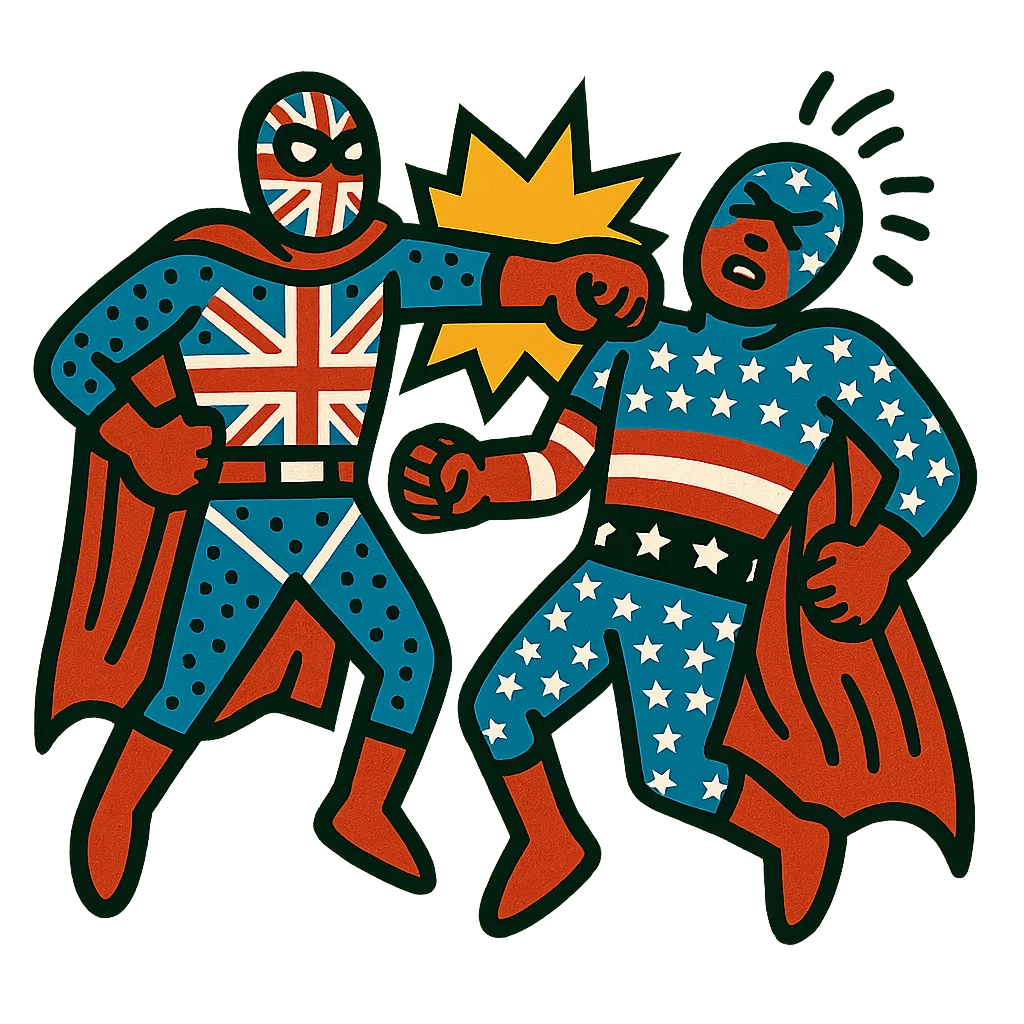
As the famous saying goes: "Britain and America are two nations divided by a common language."
While American television, cinema, and social media have made US English completely understandable to the British public, there is a massive difference between understanding a word and actually using it in your daily life. If a British speaker starts throwing random Americanisms into their everyday speech, it can sound incredibly unnatural—and sometimes flat-out ridiculous.
Today, we're exploring 15 classic American words that I, as a British native speaker, would absolutely never use in regular conversation. Let's look at what we say instead, the cultural reasons behind it, and why a few of these mix-ups can get very awkward!
15 Americanisms I Avoid 🚫
1. Movie
The American Word: Movie (e.g., "Let's watch a movie!") The British Equivalent: Film / The Cinema"We're going to the cinema tonight to see the new British film."
Why I avoid it: While completely understood, "movie" feels very Hollywood-ized. To a Brit, a creative visual masterpiece is a "film," and the place you watch it is "the cinema" (not "the movie theater").
2. Elevator
The American Word: Elevator (And definitely not "eleventer"!) The British Equivalent: Lift"We live on the fifth floor, so let's wait for the lift."
Why I avoid it: Aside from the occasional funny typo making it sound like a mysterious device that only takes you to the 11th floor, "elevator" is just too long and industrial. "Lift" is short, punchy, and describes exactly what the machine does!
3. Wack
The American Word: Wack (Meaning weird, bad, or poor quality) The British Equivalent: Rubbish / Dodgy / Pants"That new laptop I bought is absolute rubbish; the battery is so dodgy."
Why I avoid it: "Wack" emerged from American hip-hop culture in the 80s and 90s. If a British guy in London says "that car is wack," it sounds like they are trying way too hard. We prefer "rubbish," "pants" (meaning garbage), or "dodgy" if it's suspicious or unreliable.
4. Awesome
The American Word: Awesome (Used constantly for everyday things) The British Equivalent: Wicked / Brilliant / Cool / Cracking"Thanks for helping me move that desk, you're brilliant!" or "That concert was wicked!"
Why I avoid it: In the US, a cup of coffee can be "awesome." Brits find this level of enthusiasm exhausting. "Awesome" should be reserved for things that actually inspire awe (like the Northern Lights). For everyday excitement, we love "brilliant," "cracking," or the classic 90s-style "wicked."
5. Chips (as in crunchy snacks)
The American Word: Chips / Potato Chips (in a bag) The British Equivalent: Crisps"I grabbed a packet of salt and vinegar crisps with my lunch meal deal."
Why I avoid it: This is a massive linguistic border. Those thin, cold, crispy snacks that crunch in a packet are strictly "crisps." If you ask for a bag of "chips," we will look around for a deep-fat fryer!
6. Fries
The American Word: French Fries / Fries The British Equivalent: Chips (The thick-cut kind!)"I'll have fish and chips, please—make sure the chips are soaked in vinegar."
- Fries: Skinny, very thin-cut, salted matchsticks (think McDonald's style).
- Chips: Chunky, thick-cut potato blocks, crispy on the outside, steaming and fluffy on the inside (found in a traditional pub or fish & chip shop).
Why I avoid it: Calling thick, fluffy British pub chips "fries" is a capital offense. Skinny fries are "fries," but real, hearty potato cuts are always "chips." Know the difference!
7. Sidewalk
The American Word: Sidewalk The British Equivalent: Pavement"Don't ride your bicycle on the pavement; it's meant for pedestrians."
Why I avoid it: "Sidewalk" sounds too literal and descriptive, like telling someone to walk on the "side-road-plank." In the UK, it has been "the pavement" for centuries.
8. Trash / Garbage
The American Word: Trash / Garbage (And "trash can") The British Equivalent: Rubbish / Bin"Can you take the rubbish out to the wheelie bin?"
Why I avoid it: We don't have trash cans; we have "bins." And we don't throw away garbage; we throw away "rubbish." Simple as that.
9. Faucet
The American Word: Faucet The British Equivalent: Tap"The bathroom tap is leaking; we need to call a plumber."
Why I avoid it: "Faucet" sounds incredibly technical and scientific. "Tap" is simple, traditional, and easy to say.
10. Pants
The American Word: Pants (Meaning jeans, trousers, leg wear) The British Equivalent: Trousers (WARNING: UK pants mean underwear!)"I bought a sharp pair of trousers, but my pants underneath are a bit tight!"
Why I avoid it: This is a highly dangerous trap! In the UK, "pants" refers exclusively to underpants/underwear. If you tell a British person, "I love your blue pants," you are literally telling them you like their underwear. Always use "trousers" or "jeans"!
11. Apartment
The American Word: Apartment The British Equivalent: Flat"My sister is renting a bright one-bedroom flat in Manchester."
Why I avoid it: While luxury real estate agents in London love the word "apartment" because it sounds expensive, normal people in the UK live in a "flat."
12. Store
The American Word: Store (e.g., "I'm going to the grocery store") The British Equivalent: Shop"I'm popping down to the local corner shop to get some milk."
Why I avoid it: In the UK, a "store" is a massive department store (like Harrods) or a storage facility. Your local grocery, clothing, or book place is always a "shop." "Popping to the shops" is a British national hobby.
13. Sneakers
The American Word: Sneakers The British Equivalent: Trainers"I need to buy a clean pair of white trainers for casual wear."
Why I avoid it: You sneak in sneakers, but in the UK, we train in "trainers" (even if we're just walking to the pub!).
14. Vacation
The American Word: Vacation The British Equivalent: Holiday"We're going on holiday to Cornwall for a week of surfing."
Why I avoid it: In Britain, "vacation" is only used by universities to describe their term breaks. For everyone else, taking time off work to travel is going on "holiday."
15. Gasoline / Gas
The American Word: Gasoline / Gas (as in "gas station") The British Equivalent: Petrol / Petrol Station"The fuel light is flashing; I need to pull into the next petrol station."
Why I avoid it: "Gas" is a gas—a physical state of matter. Liquid petroleum fuel for a car is "petrol." Putting "gas" in a car makes no literal sense to a British brain!
The One Exception: Why I Actually Use "Ass" 🍑
Okay, let's address the elephant in the room. In British English, the traditional spelling and pronunciation is "arse". A grumpy old Brit might yell at you to "get off your arse." But here is my honest confession: I almost always use the American word "ass"!
Why? Because "arse" sounds incredibly harsh, slightly Victorian, and let's face it—a bit grumpy. On the other hand, the American word "ass" is incredibly versatile, modern, and absolutely fantastic for idioms.
Saying "smart-arse" or "bad-arse" sounds like you're a Victorian schoolmaster trying to be cool. But saying badass, smart-ass, lazy-ass, or describing something as a pain in the ass? It is infinitely more satisfying, punchy, and carries a brilliant touch of casual humor.
In fact, I love this word so much that I wrote an entire dedicated guide on it! You can read my full breakdowns and explanations in our article 10 Useful "Ass" Expressions Explained.
Final Thoughts 💭
Language is constantly evolving, and British English will always be influenced by American slang. However, keeping some distinctions alive is what makes traveling and interacting with different cultures so much fun. If you're learning English, don't worry too much about mixing these up—but mastering the local equivalents will instantly make you sound like a seasoned local!
Which Americanism do you think sounds the strangest? Have you ever had a confusing encounter because of the "pants" vs. "trousers" mix-up? Let us know!
Want to sound natural, smooth, and speak like a true native? Book a personalized 1-on-1 English lesson today!