Fighting a Losing Battle?
For fifty years, governments have fought a "War on Drugs," spending billions on police and prisons. Yet, the illegal drug trade makes more money than ever before. Many people argue that addiction should be treated as a medical emergency, not a serious crime. Should we continue to lock people up, or is it time to completely change the law and sell these products legally?
- Prohibition (noun): The act of completely stopping the sale and use of something by law.
- Cartel (noun): A large, powerful criminal group formed to control the illegal business in a region.
- Epidemic (noun): A massive societal crisis involving a disease or problem spreading very quickly.
1. Raw Vocabulary: Crime and Health
Practice: drag a word, or select it and choose a gap.
1. Criminal gangs use highly clever methods to tons of product across heavily guarded borders.
2. Once the cash is secured, the organisation uses fake businesses to the money safely into foreign banks.
3. Putting sick people in prison does not cure them; they need professional time in a centre.
4. Customs agents seized over twenty million dollars of products at the sea port.
5. Unfortunately, addiction is a lifelong disease, and it is common for patients to during times of intense stress.
6. He was arrested for travelling with a dangerous, banned .
7. The powerful Mexican controls the supply lines to the entire continent.
8. The country is currently suffering from a terrible addiction in all of its major cities.
Choose a word, then choose a gap.
2. Idioms and Expressions
When discussing the failures of current laws or addiction, native speakers rely on these powerful idioms.
- "To fight a losing battle." To try hard to do something when there is absolutely no chance that you will succeed.
- "A drop in the ocean." A very small amount compared to the amount needed (e.g., stopping one drug truck when thousands cross a day).
- "To go cold turkey." To suddenly and completely stop a bad habit or severe addiction, rather than slowly reducing it.
- "To fall off the wagon." To begin using drugs or alcohol again after a long period of staying clean.
- "A gateway drug." A soft drug that is not highly addictive itself, but which supposedly leads to the use of harder, dangerous drugs.
3. Reading: The Broken System
Read this perspective on why the strict police approach is failing.
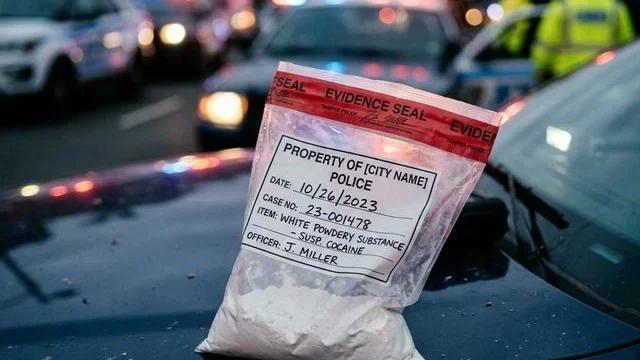
For fifty years, the government has treated drug addiction as a police problem rather than a public health emergency. Billions of dollars have been spent on border security, yet foreign cartels continue to safely smuggle record amounts of illegal products into the country. Every time the police catch a gang, it feels like a mere drop in the ocean.
Critics argue that we are fighting a losing battle. By fighting so hard, the state has just created a highly profitable black market. Cartels boldly launder billions of dollars, paying for violent gang wars in the poorest streets.
Furthermore, locking up peaceful drug users has just filled the prisons. When sick people are sent to jail instead of rehab centers, they simply do not get better. Left without medical support, they are guaranteed to relapse and fall off the wagon immediately upon release. If we changed the laws and built hospitals, we might actually cure this epidemic.
4. Grammar Focus: Inversion for Emphasis
In highly formal debates, public speaking, or passionate arguments, native speakers use Inversion. By placing a negative word at the beginning of the sentence, the subject and auxiliary verb are inverted (flipped over). This makes the statement sound dramatic and authoritative.
| Standard (Normal) Sentence | Inverted (Dramatic) Sentence |
|---|---|
| The cartels do not only steal money, but they also buy weapons. | Not only do the cartels steal money, but they also buy weapons. |
| We have rarely faced such a terrible public health crisis. | Rarely have we faced such a terrible public health crisis. |
| You should under no circumstances sell bad products to minors. | Under no circumstances should you sell bad products to minors. |
Pro Tip: Notice how the inverted sentence looks exactly like a question (e.g., "do they steal–, "have we faced–), even though it is a statement!
Exercise A: Build the Inverted Sentence
1. Make it dramatic: "The war on drugs has never been so terribly violent."
Never...
2. Make it dramatic: "They not only launder cash, but they also bribe politicians."
Not only...
Exercise B: Complete the Expressions
Type the missing words to complete these conversational idioms.
1. He surprisingly tried to quit his bad habits by immediately going cold .
2. Arresting a single street dealer won't stop the crime; it's honestly just a drop in the .
5. Debate Support: Prepare Your Arguments
Before you debate, look at these points and use the sentence starters below.
- If the state sells the products, it taxes them, creating billions for hospitals.
- It destroys the criminal gangs because they lose their only product.
- It stops the police from filling prisons with non-violent people.
- If you make it cheap and easy to buy, addiction rates will quickly skyrocket.
- It sends a terrible message to teenagers that dangerous habits are socially acceptable.
- "Soft" drugs easily act as a gateway drug to much worse, deadlier problems.
- "Never has there been a clearer sign that we are fighting a losing battle..."
- "If we simply treat addicts as patients instead of criminals..."
- "You cannot ignore the fact that soft substances act as a gateway..."
- "Not only does prohibition fail, but it also..."
6. The Hot Seat: Debate Practice 🎙️
- Do you strongly believe that the modern "War on Drugs" is fighting a losing battle? Why or why not?
- Some concerned politicians argue that marijuana is a dangerous gateway drug. Do you agree that soft habits always lead to strict illegal habits?
- Use Inversion for Emphasis: "Under no circumstances should..." (Finish the sentence regarding government policy).
- If a country shifted its entire police budget into building more rehab centers, what do you assume would happen to the general crime rate?
- Why is it so difficult for governments to stop large international cartels from safely smuggling goods, even when billions are spent on security?