The Price of Perfection.
In the age of social media filters, the pursuit of physical perfection has become an obsession. What used to be reconstructive surgery for burn victims has morphed into a multi-billion-dollar vanity industry. But where do we draw the line? At what point should a doctor refuse to operate? In this unit, we explore the vocabulary of extreme cosmetic alteration.
- Cosmetic surgery (noun): Medical procedures focused on enhancing appearance rather than fixing medical issues.
- Body dysmorphia (noun): A mental health condition where a person spends a lot of time worrying about flaws in their appearance, which are often unnoticeable to others.
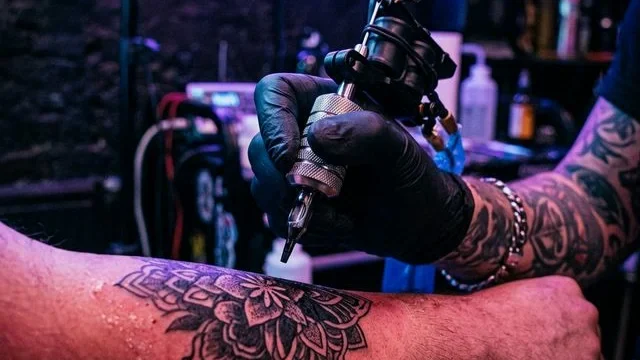
- Body modification (noun): The deliberate altering of the human anatomy (e.g., tattoos, piercings, tongue splitting) often for non-medical reasons.
1. Raw Vocabulary: The Surgical Upgrade
Practice: drag a word, or select it and choose a gap.
1. Tattoos used to belong to sailors and rebels, but today they are completely .
2. She travelled abroad for cheap surgery, but it was completely and she had to be hospitalized.
3. In extreme body modification communities, some people voluntarily elect to healthy fingers or toes.
4. Critics argue that social media has made modern society incredibly vain and .
5. The doctor used a laser to permanently remove a dark from her cheek.
6. He had a solid silicone inserted under his skin to change the shape of his jawline.
Choose a word, then choose a gap.
2. Idioms and Expressions
When society discusses the consequences of physical vanity, they use these sharp idioms.
- "To go under the knife." An informal phrase meaning to have a medical operation or surgery.
- "Beauty is only skin deep." A proverb meaning that a person's physical appearance does not reflect their true character or worth.
- "To go overboard." To do too much of something; to act in an extreme, excessive way.
- "A nip and tuck." A casual term for minor plastic surgery, usually to remove small amounts of fat or tighten the skin.
3. Reading: The Endless Upgrade
Read this account of someone who couldn't stop fixing their "flaws."
At 22, Alex decided to get a minor nip and tuck. He had his nose straightened. It was a simple procedure, and the results were subtle. But looking in the mirror, Alex didn't feel satisfied. Instead, he immediately noticed a new blemish. His jaw didn't look right anymore.
Over the next five years, Alex went under the knife fourteen times. He had his cheekbones altered, he got silicone implants in his chest, and he had his ears pinned back. Friends warned him he was going overboard, but Alex was suffering from severe body dysmorphia. To him, every surgery was just fixing a "necessary" defect.
Eventually, mainstream doctors refused to operate on him, recognising the psychological issue. Desperate, Alex found an unlicensed clinic operating out of a basement. The resulting procedure was horribly botched, leaving him with permanent nerve damage and severe scarring. The pursuit of perfection had cost him his face.
4. Grammar Focus: Causative Verbs (Have / Get something done)
You cannot use standard active verbs to talk about surgery or tattoos unless you are the doctor performing it. Because you are paying a professional to do the action to you, you must use Causative Verbs.
| Structure | Usage / Meaning | Surgical Example |
|---|---|---|
| Active Verb (Wrong context) | Implies you performed the surgery on yourself. | "I changed my nose." ❌ (Did you use a knife in the bathroom?) |
| Have/Get + Object + Past Participle (V3) | Implies you arranged/paid for a professional to do it. | "I had my nose changed." ✅ "He got his tattoos removed." ✅ |
Pro Tip: "Get" is slightly more informal than "Have," but they mean exactly the same thing in this context.
Exercise A: Build the Causative Form
1. She didn't pierce her tongue herself. She ____________ by a professional.
2. His original surgery was botched, so he has to go back next week to ____________.
Exercise B: Complete the Expressions
Type the missing words to complete these heavy idioms.
1. She is terrified of hospitals, so she refuses to go under the .
2. Stop worrying about your appearance so much; beauty is only skin .
5. The Hot Seat: Debate Practice 🎙️
- At what point does a desire to look good cross the line into body dysmorphia? How do you tell if someone is going overboard?
- Should plastic surgeons be legally required to send patients to a psychologist before they allow them to go under the knife?
- Use the Causative: If you had unlimited money and no fear of pain, is there anything you would have altered or get removed?
- Is there a moral difference between getting a mainstream tattoo and getting a silicone implant in your forehead to look like horns?
- Why do you think society views someone who has extensive, obvious plastic surgery as being superficial?