Fighting a Losing Battle?
For decades, governments have waged a "War on Drugs," spending billions on border security and mass incarceration. Yet, the illegal narcotics trade is more profitable than ever. Many argue that addiction should be treated as a medical epidemic, not a criminal offence. Should we heavily penalise drug use, or is it time to completely decriminalise and regulate the market?
- Prohibition (noun): The legal action of forbidding something, especially drugs or alcohol, by law.
- Cartel (noun): A powerful, illegal criminal syndicate formed to control the production and distribution of drugs across borders.
- Epidemic (noun): A widespread occurrence of an infectious disease or, in this context, a massive societal crisis of addiction.
1. Raw Vocabulary: Crime and Health
Practice: drag a word, or select it and choose a gap.
1. Cartels use incredibly sophisticated methods to tons of product across heavily guarded borders.
2. Once the cash is secured, the syndicate uses fake front businesses to the money into the legal banking system.
3. Putting an addict in prison doesn't cure them; they need professional medical .
4. Customs agents seized over twenty million dollars worth of at the shipping port.
5. Unfortunately, addiction is a lifelong disease, and it is very common for patients to during times of stress.
6. He was arrested for possession of a Class-A .
Choose a word, then choose a gap.
2. Idioms and Expressions
When discussing the futility of the drug war or the struggles of addiction, native speakers rely on these powerful idioms.
- "To fight a losing battle." To try hard to do something when there is no chance that you will succeed.
- "A drop in the ocean." A very small amount compared to the amount needed (e.g., seizing one drug shipment when thousands cross the border daily).
- "To go cold turkey." To abruptly and completely give up a habit or addiction, rather than gradually reducing it.
- "To fall off the wagon." To begin using drugs or alcohol again after a period of being sober.
- "A gateway drug." A habit-forming drug that, while not itself addictive, may lead to the use of other addictive drugs.
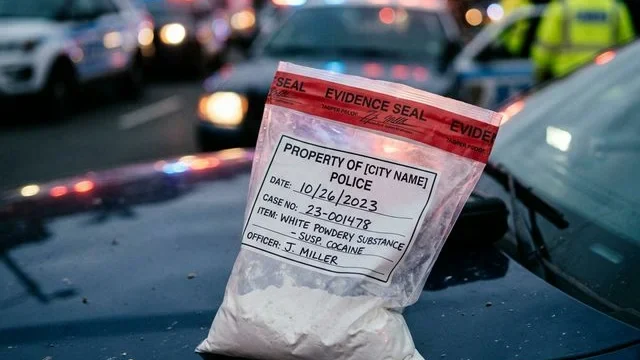
3. Reading: The Broken System
Read this perspective on why the strict enforcement approach may be failing.
For fifty years, the government has treated drug addiction as a criminal justice problem rather than a public health crisis. Billions of dollars have been poured into border security, yet cartels continue to smuggle record amounts of narcotics into the country. Every time law enforcement seizes a shipment of contraband, it feels like a mere drop in the ocean.
Critics argue that we are fighting a losing battle. By focusing on prohibition, the state has created a highly lucrative black market. Cartels launder billions of dollars, fueling violent turf wars in the cities.
Furthermore, locking up non-violent drug users has led to mass incarceration. When addicts are sent to prison instead of rehabilitation centres, they rarely get the help they need. Without therapy, they are almost guaranteed to relapse and fall off the wagon the moment they are released. Advocates argue that if we decriminalised personal use and redirected the police budget toward mental health and rehab facilities, we could finally treat the root cause of the epidemic.
4. Grammar Focus: Inversion for Emphasis
In highly formal debates, public speaking, or passionate arguments, native speakers use Inversion. By placing a negative adverb at the beginning of the sentence, the subject and auxiliary verb are inverted (flipped). This makes the statement sound dramatic and authoritative.
| Standard (Normal) Sentence | Inverted (Dramatic) Sentence |
|---|---|
| The cartels do not only smuggle drugs, but they also buy weapons. | Not only do the cartels smuggle drugs, but they also buy weapons. |
| We have rarely seen such a terrible epidemic. | Rarely have we seen such a terrible epidemic. |
| You should under no circumstances sell drugs to minors. | Under no circumstances should you sell drugs to minors. |
Pro Tip: Notice how the inverted sentence looks exactly like a question structure (e.g., "do they smuggle–, "have we seen–), even though it is a statement!
Exercise A: Build the Inverted Sentence
1. Make it dramatic: "The war on drugs has never been so expensive."
Never...
2. Make it dramatic: "They not only launder money, but they also bribe politicians."
Not only...
Exercise B: Complete the Expressions
Type the missing words to complete these conversational idioms.
1. He tried to quit his addiction by going completely cold .
2. Arresting a few low-level dealers won't stop the cartel; it's just a drop in the .
5. The Hot Seat: Debate Practice 🎙️
- Do you believe that the "War on Drugs" is fighting a losing battle? Why or why not?
- Some politicians argue that marijuana is a gateway drug. Do you agree that soft drugs lead to hard narcotics?
- Use Inversion for Emphasis: "Under no circumstances should..." (Finish the sentence regarding government drug policy).
- If a country shifted its entire police budget into medical rehabilitation centres, what do you think would happen to the crime rate?
- Why is it so difficult to stop international cartels from operating, even when billions are spent on border security?