Too Young to Understand?
When an adult commits murder, society demands justice. But what happens when the killer is 11 years old? Do we focus on punishing the criminal, or rehabilitating the child? In this unit, we dive into the dark reality of juvenile crime, exploring the heavy legal vocabulary used in courtrooms to decide if a child truly understands the finality of death.
- Juvenile (noun/adj): A young person who is not yet legally considered an adult.
- Culpability (noun): Responsibility for a fault or wrong; blame. (Are they morally culpable?)
- Rehabilitation (noun): The action of restoring someone to a normal life through training and therapy after imprisonment.
1. Raw Vocabulary: Inside the Courtroom
Practice: drag a word, or select it and choose a gap.
1. Because of the brutal nature of the crime, the prosecutor wants the 15-year-old to be as an adult.
2. The judge handed down a harsh life with no possibility of release.
3. This wasn't an accident; the evidence proves the attack was cold and .
4. Many psychologists argue that long-term only turns juvenile delinquents into hardened adult criminals.
5. After serving 15 years and showing remorse, he was granted by the board.
6. To protect them from vigilante justice, the law grants lifelong to child killers when they are released.
Choose a word, then choose a gap.
2. Idioms and Expressions
When the public debates crime and punishment, they often use these polarizing idioms to express their desire for justice or mercy.
- "To know right from wrong." To have the moral capacity to understand that your actions are evil or harmful.
- "A slap on the wrist." A very mild punishment or warning, considered far too lenient for the crime committed.
- "Throw away the key." To lock someone in prison forever and never let them out.
- "To make an example of someone." To punish a person severely in order to deter others from doing the same thing.
- "A product of their environment." The idea that a person's behaviour is the direct result of a terrible upbringing, poverty, or abuse, lessening their personal blame.
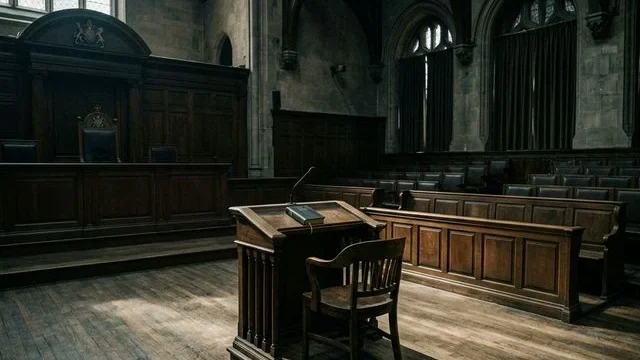
3. Reading: The Verdict
Read this fictionalized account of a highly controversial sentencing.
The nation was divided when two 12-year-old boys were found guilty of a horrific, premeditated murder. Outside the courthouse, angry crowds gathered, demanding that the boys be treated like adults. "If you do the crime, you do the time!" one protestor shouted, demanding the judge throw away the key.
Inside, the defence lawyers argued that the boys were a product of their environment—raised in severe abuse and neglect. They argued that at 12 years old, the human brain is not fully developed, and the boys lacked the true moral culpability to understand the finality of death. They begged the judge to allow the boys to be rehabilitated in a secure psychiatric facility.
The prosecution countered that granting them a few years in therapy would be nothing more than a slap on the wrist for taking a life. The judge ultimately ruled that due to the severity of the crime, the boys deserved to be incarcerated in a high-security youth prison until they reached adulthood, at which point they could apply for parole under strict anonymity.
4. Grammar Focus: Passive Infinitives and Gerunds
When discussing the legal system, we often focus on what happens to the criminal, rather than who is doing the punishing. To do this, we use the passive forms of infinitives and gerunds.
| Form | Structure | Courtroom Example |
|---|---|---|
| Passive Infinitive | to be + Past Participle (V3) | "The crowd demanded the boys to be tried as adults." (Follows verbs like want, need, deserve, demand). |
| Passive Gerund | being + Past Participle (V3) | "He is terrified of being sentenced to life in prison." (Follows prepositions or verbs like avoid, fear, resent). |
Exercise A: Choose the Correct Passive Form
1. The defence lawyer argued that the 12-year-old didn't deserve ____________ to a maximum-security adult prison.
2. The young defendant cried in court, terrified of ____________ locked away forever.
Exercise B: Complete the Expressions
Type the missing words to complete these conversational idioms.
1. Five years in a youth facility for murder is just a slap on the .
2. They didn't have a chance in life; their violent behaviour makes them a product of their .
5. The Hot Seat: Debate Practice 🎙️
- At what age do you believe a child truly knows right from wrong? Should there be a universal age of criminal responsibility?
- When a juvenile commits a premeditated murder, should they ever be granted anonymity upon release?
- Use a Passive Infinitive: Do you think violent teenagers deserve to be tried as adults, or to be rehabilitated?
- Is it fair to blame a child's actions on them being a product of their environment, or does everyone have a choice?
- If a judge gives a young killer a light sentence, are they giving them a second chance, or just a slap on the wrist?