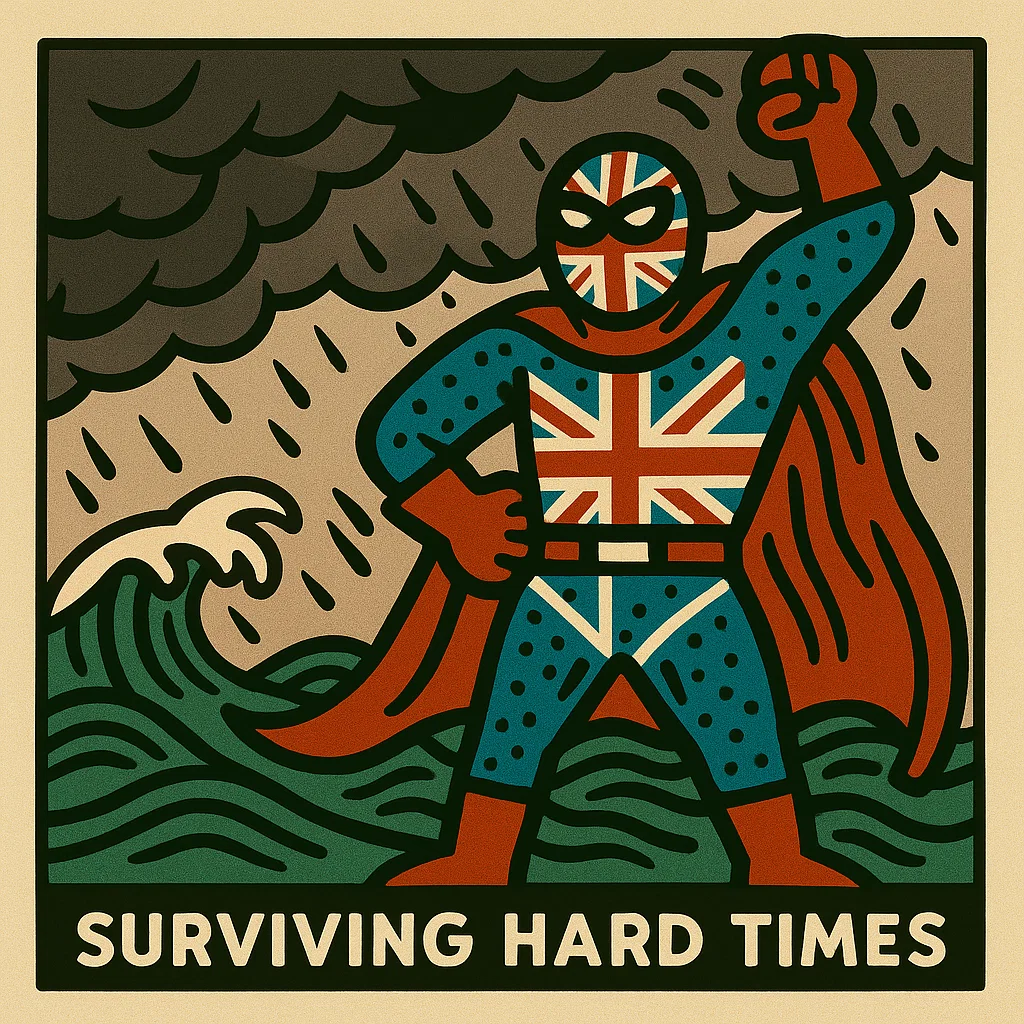
English for Difficult Situations
Hard Times Vocabulary • Real-Life English Phrases • Online English Lessons with a Native Speaker
Hard Times & Difficult Situations
At this time of adversity, we have to stay strong and soldier on as there is always light at the end of the tunnel. Maybe you’re working from home, maybe you’re a key-worker still going to work every day, or maybe you’re just feeling a bit fed up that you’re stuck indoors more than usual.
In hard times people struggle to stay positive, cope with new routines, and dig deep to find extra energy. Some people are lucky and are almost immune to stress. Others feel overwhelmed by the news, panic buying in shops, worrying about epidemics and even global pandemics, and checking the number of cases online every hour.
During a lockdown or crisis, governments often talk about people with underlying health conditions, and how to protect them. We see headlines about survival of the fittest, and arguments about whether people are abusing the rules and going out too much. It’s a lot to deal with in your first language, never mind in English.
That’s why it’s useful to have natural phrases for hard times. When you can describe how you feel – “I’m really struggling with this”, “I’m trying to hang in there”, “I feel fed up” – you can explain your situation clearly and connect with people more easily.
Useful Vocabulary for Hard Times
Adversity – difficult and hard times.
In times of adversity we have to stick together and stay strong.
Soldier on – to keep going when times get hard.
I know things are hard right now, but we have to soldier on.
Dig deep – to find extra energy or will in hard times.
This exercise is hard, but you need to dig deep and complete it.
Struggle – to find something not easy.
At this time I struggle to stay inside all day.
Cope with – to deal with something difficult.
Right now I am coping with cooking every day.
Immune – when something can’t affect you (usually a virus) because you’ve already had it.
He has chicken pox, so don’t go near him. It’s OK, I’m immune, I had it as a child.
Hang in there – to keep going when you want to quit. Often used to encourage someone.
I know you want to quit, but hang in there, there are only two more weeks left.
Panic buy – to buy much more than you need because you’re afraid things will run out.
The worst thing you can do is panic buy because it leaves other people without basics.
Underlying health conditions – long-term health problems that weaken the immune system.
People with underlying health conditions are at higher risk.
Fed up – to feel sad and tired of a situation.
I feel fed up that we have to spend so much time indoors.
Epidemic / Pandemic – lots of cases of a virus in one area / all over the world.
We studied how an epidemic can grow into a pandemic.
Cases – the number of people who have a virus or illness.
There have been over 100,000 cases this year.
Key-worker – a worker who provides an essential service to the public.
My son works in a supermarket and my daughter is a nurse, so they’re both key-workers.
Lockdown – when there are strong restrictions on movement and daily life.
There isn’t much to do outside because of the current lockdown.
Abusing (something) – using something too much or in the wrong way.
Because people are abusing their daily walk, the government may tighten the rules.
Survival of the fittest – only the strongest / best prepared will survive.
We need to choose the five best people for the job – it’s survival of the fittest.
Discussion Questions
- Can you remember the last time you really had to dig deep?
- What do you struggle to cope with in hard times?
- Do you know any key-workers? How has their life changed?
- Do people in your country panic buy or are they calm?
- When you feel fed up, what helps you soldier on?
- Do you think crises are really survival of the fittest?