
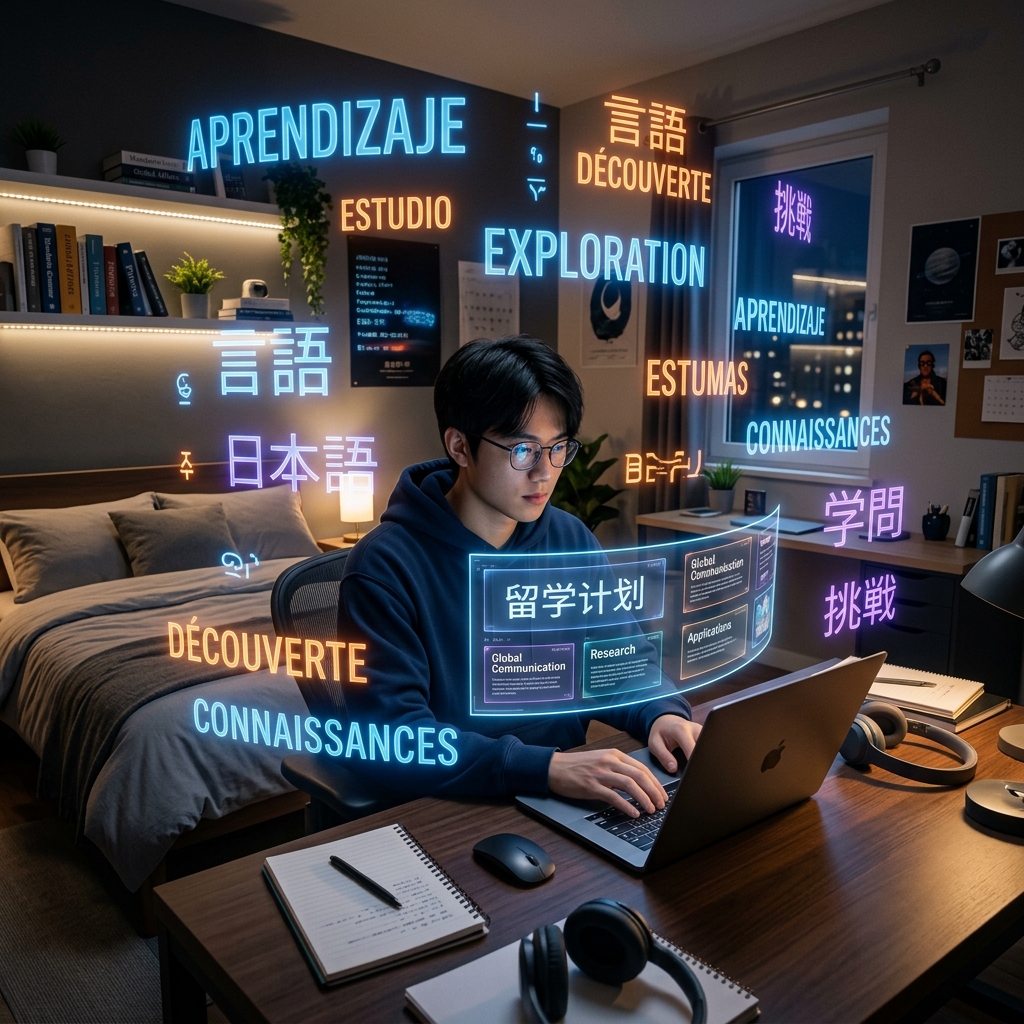
Li Wei, a computer science student in Shanghai, says he managed to reach a high level of fluency in Spanish, French, German, Italian, and Japanese in less than twelve months. His secret? He spent up to six hours a day talking to advanced AI chatbots. "I did not use any textbooks or go to any classes," Li explained. "I just treated the AI like a real friend."
By using voice-to-text and instant translation features, Li was able to have continuous, real-time conversations about any topic he chose. The AI provided instant corrections and explained grammar rules as they went. "It is mind-blowing how much you can learn when you are not afraid of making mistakes," Li said. "The robot never gets tired or irritable, no matter how many times you ask the same question."
"The future of learning is not in a classroom; it is in your pocket. I have learned more from my phone than I ever did in ten years of school."
Linguists are divided on Li's achievement. While some are shocked by his dedication, others worry that AI learned languages might lack the cultural nuance of traditional learning. "Language is about human connection," said one professor. "A robot can teach you the words, but it cannot teach you the soul of a culture."
Critics of the method argue that true polyglot status requires immersion. Regardless of the negative feedback, Li's success has sparked a massive interest in assisted learning. He is now planning to start a YouTube channel to show others how to hack their way to fluency. It seems the days of boring grammar exercises might finally be numbered.
Li's approach has even caught the attention of major tech companies who are now looking to develop specialized tutor versions of their AI models. "The potential is enormous," said a lead developer at a top AI firm. "Imagine having a personal tutor for every subject, available 24/7, for free. It could democratize education in a way we have never seen before." However, some fear that this could lead to the loss of thousands of teaching jobs, sparking a new debate about the role of technology in our schools and universities.
💬 Reader Comments
Loading comments...