
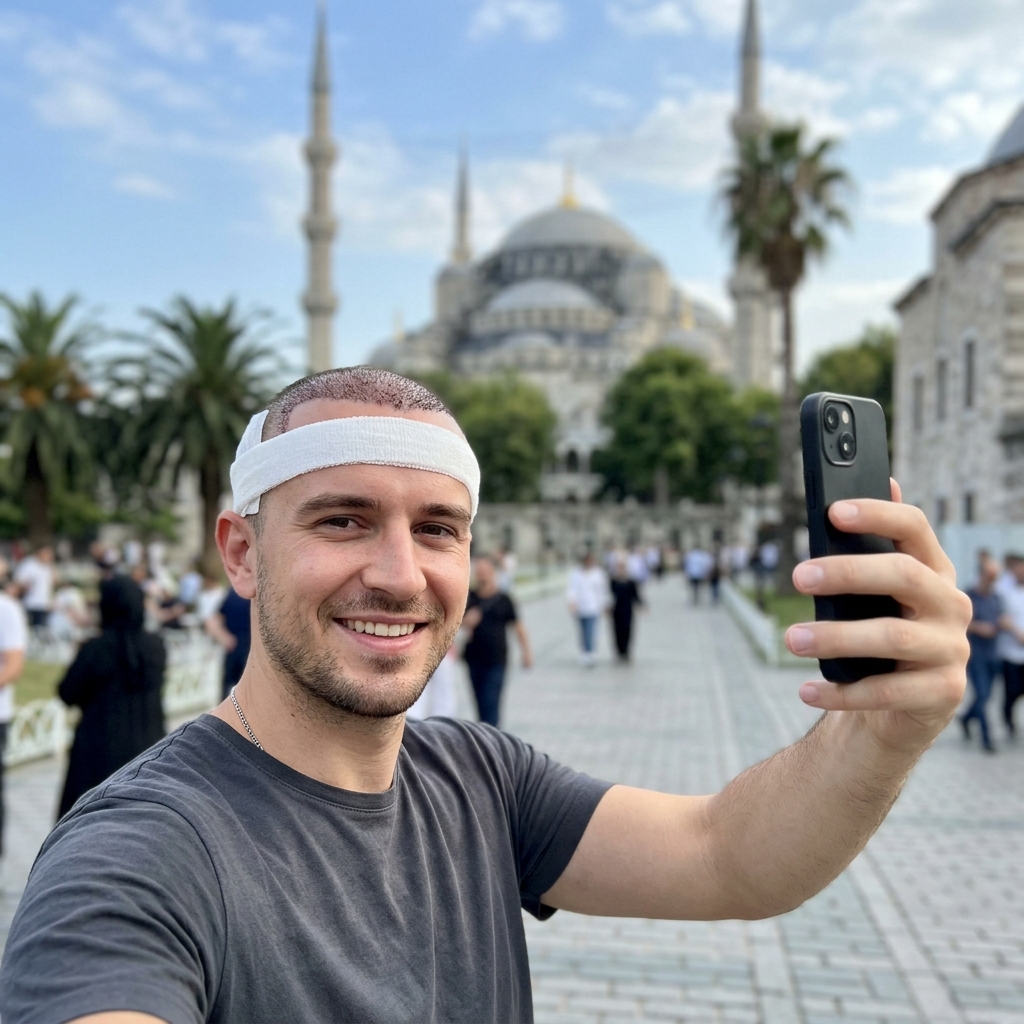
Medical tourism has grown exponentially over the last decade, transforming the historic streets of Istanbul into a bustling global hub for cosmetic enhancements. Every single day, thousands of international travellers arrive at the airport sporting matching black headbands and tiny red surgical dots across their hairlines. This booming trade promises an affordable, high-quality solution to hair loss. However, the raw reality of the surgical recovery period has left many patients completely horrified by the sheer physical impact of the procedure.
For 34-year-old London office worker James, the journey to Turkey was born out of deep personal desperation. After spending years watching his hairline slowly disappear, he finally opted for a highly popular, budget-friendly transplant package at an exclusive clinic in the capital. The marketing materials promised a quick, painless, and completely pseudo-premium lifestyle experience, including five-star hotel accommodations and private luxury transport directly from the terminal gates.
Yet, the actual operation proved to be an incredibly grueling and intense ordeal. The process involves harvesting thousands of individual hair roots from the back of the neck and meticulously placing them into microscopic incisions across the front of the scalp. While the clinic’s slick promotional videos make the operation look simple and easy, James spent eight hours listening to the mechanical crunching sounds of medical instruments piercing his skin, leaving him feeling completely exhausted and vulnerable by the time the local anaesthetic wore off.
"The promotional photos online only show handsome men smiling in luxury hotel lobbies with a neat little bandage," James explained during an intimate interview. "Nobody tells you about the true horror of the recovery period. My entire face swelled up like a giant, bruised balloon within twenty-four hours. I couldn't sleep because you have to sit completely upright at a strict ninety-degree angle to prevent the newly implanted roots from sliding out. The physical pain was intense, but the true emotional humiliation of walking through a busy airport looking like a medical experiment was unforgettable."
The sudden explosion of these cheap cosmetic operations has triggered an intense, highly controversial debate within the global medical community. While Turkish clinics are praised for their incredible technical efficiency, traditional British surgeons heavily warn against the dangers of prioritizing a low price over safety. They argue that many budget facilities operate at an incredibly rapid, assembly-line pace, which completely cuts out crucial post-operative support and leaves international patients helpless if complications occur.
"We are seeing an alarming influx of young men returning from abroad with severe scalp infections and badly botched hairlines," explained Dr. Sarah Collins, a leading hair restoration specialist based in London. "These foreign operations are highly successful for the clinics, but their assembly-line model often relies on unqualified technicians rather than certified surgeons. When an operation goes wrong, the physical damage is completely irreversible, leaving the patient to pay thousands more for corrective surgery back home."
Despite the frightening warnings and the painful recovery stories shared across internet forums, the economic reality means the medical trade shows absolutely zero signs of slowing down. For millions of self-conscious men, the promise of a thick, youthful head of hair is an incredibly powerful incentive that easily overrides any temporary pain or temporary look. James, whose hairline is now slowly starting to recover after months of intense care, admits that the gamble was ultimately worth the trouble, but warns others to completely abandon any illusions of a simple, painless beauty trip.
The clinic operators rely on an aggressive digital campaign to draw in foreign clients, using rigid terms that tend to trivialise the medical risks. Many clients show deep nostalgia for their youthful appearance, hoping a fresh set of hair will help them distinguish themselves in a competitive job market.
As long as social media algorithms continue to push unrealistic beauty standards onto the public, the pilgrimage to Istanbul will remain a major cultural phenomenon. It forces travellers to make a difficult, highly sensible choice: accept the natural aging process, or willingly endure intense physical suffering and public embarrassment to secure a fresh lease of confidence.
💬 Reader Comments
Loading comments...