
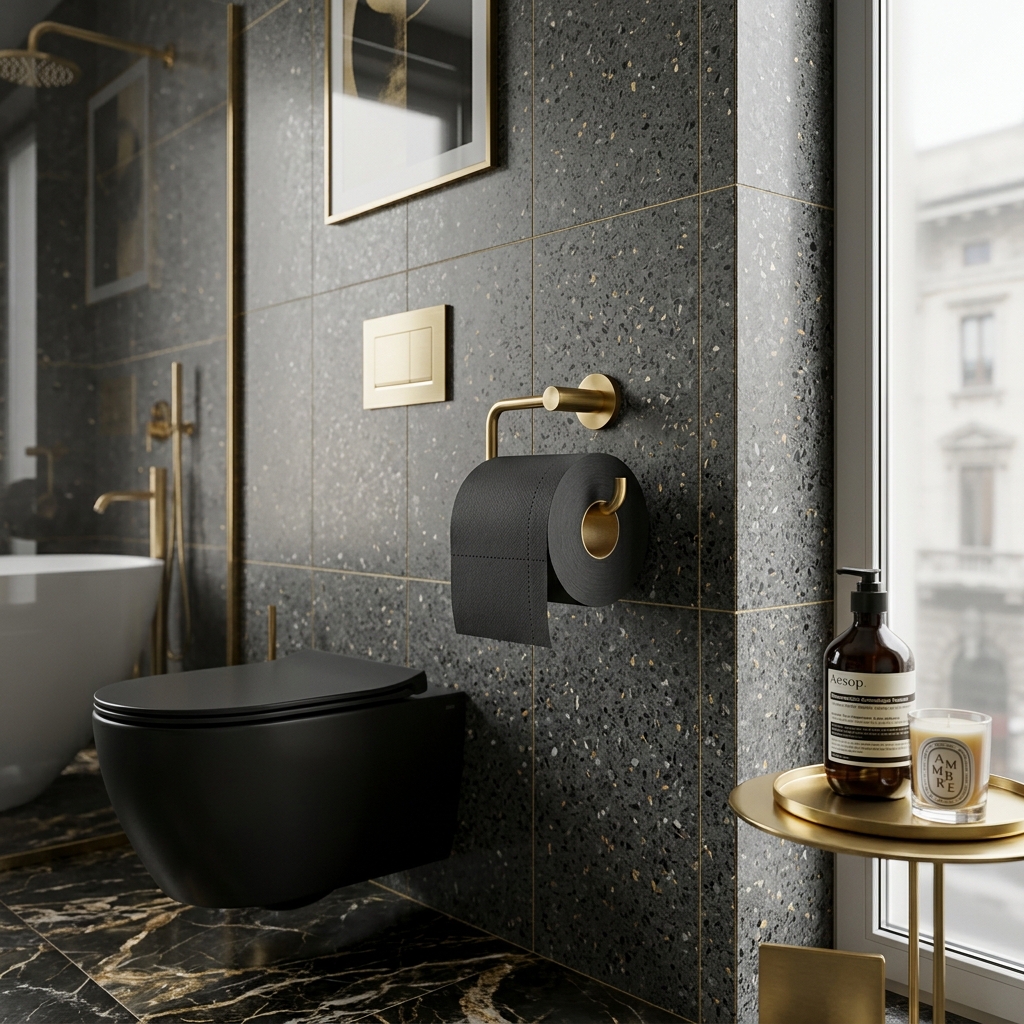
The global capital of fashion and design, Milan, is renowned for turning ordinary household objects into high-end statements of wealth. From minimalist furniture to designer kitchenware, the local elite are always searching for new ways to display their aesthetic superiority. Yet, the latest luxury trend dominating the city’s most upscale apartments has triggered an intense media storm. A prominent lifestyle brand has launched a line of pitch-black, perfume-infused toilet paper, and consumers are happily paying a massive premium for the monochromatic accessory.
Retailing at a staggering twenty-five euros for a pack of three rolls, the item has quickly become the ultimate, highly pretentious status symbol. The product is manufactured using rare, organic dyes and features intricate embossed patterns reminiscent of classic Italian architectural details. Despite traditional financial experts viewing the product as an absolute financial flop, boutique hotels and wealthy homeowners are buying it in bulk to match their dark marble bathrooms.
The sudden craze has caused an immediate and intense cultural backlash among consumer advocacy groups, who argue that commodifying a basic sanitation item to this extreme degree is a sign of societal decay. "It is a supreme example of how modern marketing can manipulate people into buying anything if it looks exclusive," remarked local fashion journalist Matteo during a radio panel segment. "We are talking about throwing decorated, dyed paper directly down the drain. It is wildly unreasonable and completely lacks any sense of practical utility."
"When my wealthy clients spend millions of euros designing a custom, ultra-modern black marble bathroom, standard white paper completely ruins the uniform aesthetic," explained prominent interior architect Francesca Rossi. "The black toilet paper isn't about snobbery; it is about absolute design continuity and meticulous attention to detail. It is a highly creative product that elevates an ordinary room into a dramatic gallery space. My clients don't care about the price; they care about the absolute perfection of the visual experience."
While design purists strongly defend the high-end accessory, environmentalists have quickly raised the alarm regarding the ecological impact of the trend. Dermatologists have also issued formal warnings to the public, suggesting that the heavy synthetic colorants used to achieve the matte black appearance could be highly detrimental to human skin, leaving self-conscious buyers highly vulnerable to unexpected allergic reactions and severe physical irritation.
The ongoing bathroom conflict highlights a fascinating psychological reality within modern high society. The unique scarcity of a luxury item often overrides any consideration of safety, utility, or logic. For the global elite, avoiding any sense of domestic conventionality is a highly active campaign, even if it means transforming a routine trip to the restroom into an incredibly expensive, heavily branded design exhibition.
Despite the mounting criticism, the company remains completely unapologetic about their premium line, actively attempting to trivialise the environmental concerns. This bold approach allows them to clearly distinguish their brand from standard supermarket offerings, catering exclusively to the elite.
Ultimately, the black paper trend serves as a fascinating lesson in modern consumerism. It proves that wealthy buyers will happily pay a fortune for an object that is objectively absurd, provided it carries the right brand name and perfectly matches their bathroom tiles.
💬 Reader Comments
Loading comments...