
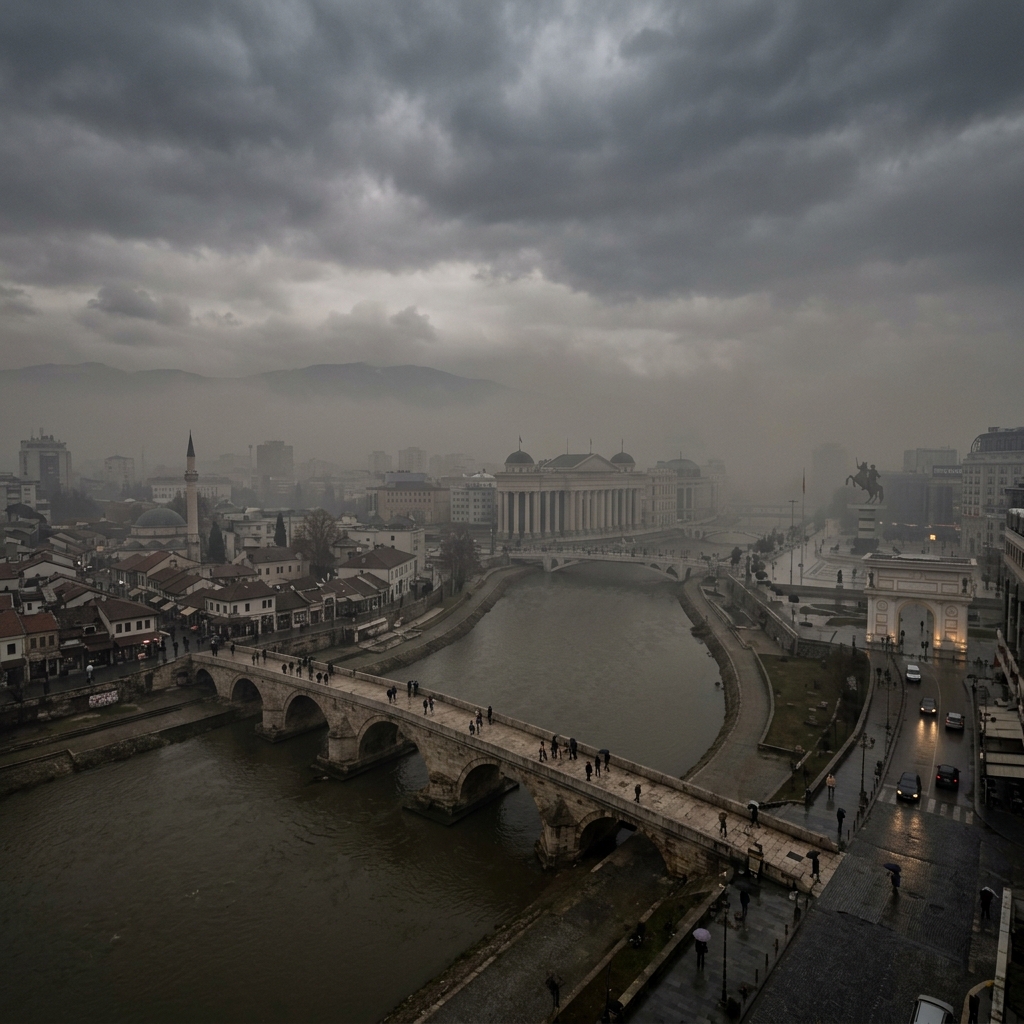
The city of Skopje, nestled in a valley in the heart of the Balkans, is home to a rich mix of Ottoman history, neoclassical architecture, and vibrant culture. But every winter, the capital suffers from a hazardous environmental crisis. Due to its unique geographic location, cold temperatures, and the widespread use of old-fashioned coal and wood heating systems, the city is frequently covered by a suffocating, dense layer of smog that makes it the most polluted capital in Europe.
During the peak months of January and February, the air quality levels often reach dangerous heights, frequently exceeding the safety limits set by the World Health Organization. Residents are often advised to stay indoors, schools sometimes close for weeks, and the city centre turns into a quiet, grey, and sombre landscape. The smog is so thick that it is often impossible to see the nearby mountains, which normally provide a stunning backdrop to the city.
For the average resident, the pollution is not just a statistical problem; it is a direct threat to their daily health. Locals frequently complain of persistent coughing, eye irritation, and long-term respiratory issues. Many have invested in high-quality air purifiers for their homes, and wearing heavy-duty medical masks when walking outside has become a standard, if highly unpopular, routine.
"It feels like we are living inside a giant, dirty chimney," says Marija, a 34-year-old nurse who has lived in Skopje her entire life. "When I walk to the hospital, the air is so heavy you can actually taste the coal. It is incredibly disheartening to raise my children in an environment where they cannot even play in the park for more than twenty minutes. We are all becoming incredibly vulnerable to long-term health problems."
The environmental struggle in Skopje has sparked intense national debates about how a developing economy can transition toward cleaner, more sustainable energy sources. The government has introduced various green initiatives, including financial grants for citizens to replace old heating boilers and increased investments in public transport. However, critics argue that these efforts are moving much too slowly to protect the local population from the current yearly crisis.
Despite these serious challenges, the people of Skopje remain remarkably resilient. On the few days when the wind finally clears the valley, the city feels like a completely different place—vibrant, energetic, and full of life. It is a powerful reminder that while the fight for clean air is a massive, long-term political struggle, the spirit of the people trying to survive the smog remains completely unbroken.
The situation in the Balkans is a stark, cautionary tale for the rest of the world. It shows that as global urbanisation continues to accelerate, the struggle to balance economic growth with clean, breathable air is becoming the single most substantial challenge for future city planning.
💬 Reader Comments
Loading comments...