
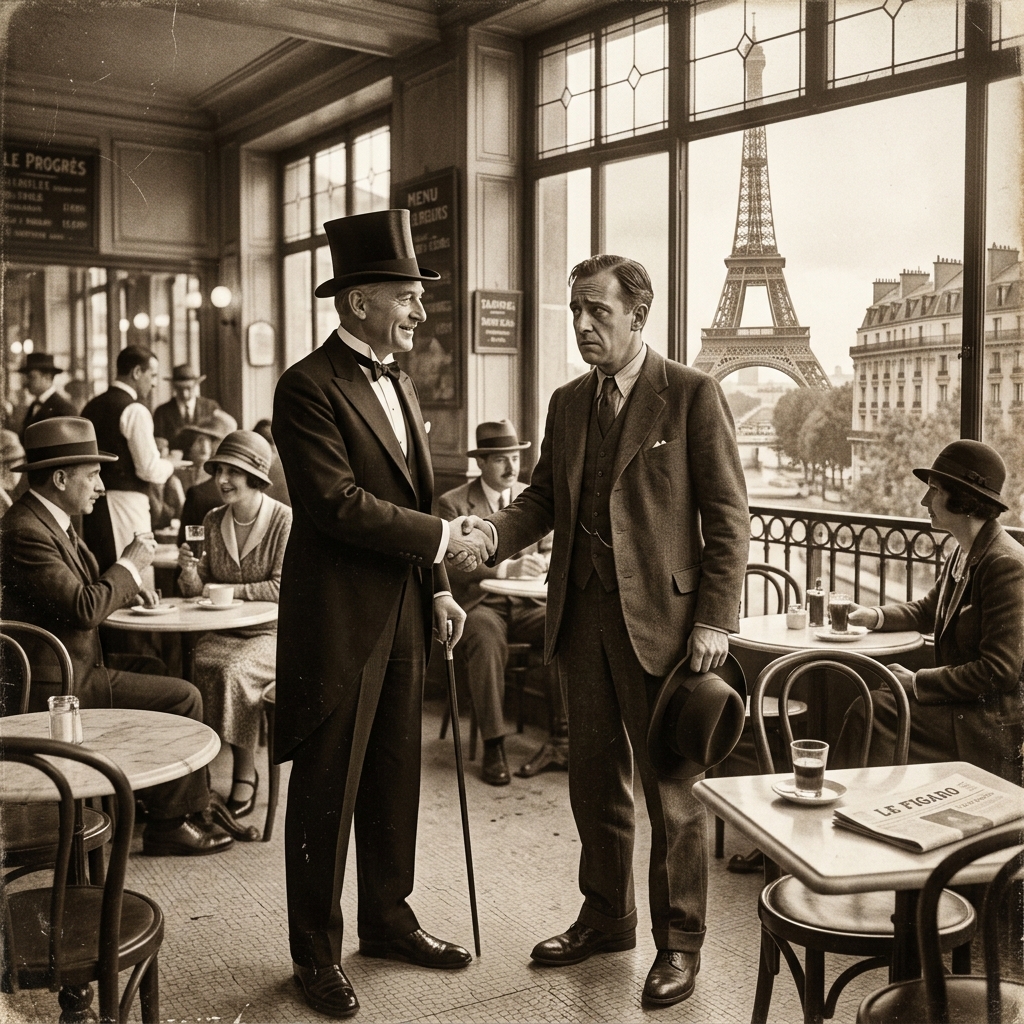
In the summer of 1925, Paris was recovering from the scars of the First World War. The Eiffel Tower, now a global icon, was actually in a state of disrepair and was costing the city a fortune to maintain. This small detail provided the perfect opportunity for Victor Lustig, a smooth-talking con artist with dozens of aliases and a talent for deception. Lustig's plan was so bold that it would go down as one of the greatest scams in history.
Lustig invited six of the city's most prominent scrap metal dealers to a top secret meeting at the Crillon Hotel. He insists that the government had decided to dismantle the tower because it was too expensive to maintain. He told the dealers that the Eiffel Tower was to be sold for scrap metal, but that the news had to be kept strictly confidential to avoid a public outcry. His performance was flawlessly executed, playing on the greed and ambition of the businessmen.
"The city is in a crisis, and we must act quickly and quietly. The tower is a beautiful relic, but its time has passed. We are looking for a discreet partner to handle the demolition."
One dealer, André Poisson, was particularly anxious to make a name for himself in the Parisian business world. Lustig sensed his insecurity and used it to his advantage. Not only did Poisson pay a massive sum for the rights to the metal, but he also gave Lustig a large bribe to ensure his bid was successful. Lustig quickly vanished with the cash, fleeing to Vienna while Poisson was left too embarrassed to even report the crime to the police. Lustig was so bold that he actually returned to Paris a month later to try and sell the tower a second time!
While he was eventually caught and sent to prison in America, Lustig's story remains a fascinating study in human psychology and the power of persuasion. It reminds us that often, the most unbelievable lies are the ones that people are most willing to believe if they are told with enough confidence. Today, the Eiffel Tower remains one of the most visited sites in the world, a permanent monument to French engineering, and a silent reminder of the man who almost sold it for scrap.
In the end, Lustig’s legacy isn’t just about the money he stole, but the sheer audacity of his imagination. He proved that with the right suit, a fake letterhead, and a calm voice, you can convince someone of almost anything. It's a sobering lesson for any modern investor: if a deal seems too good to be true, it probably involves a cunning con man and a national monument. Lustig remains the undisputed king of the long con, a man who turned the impossible into a very profitable, and very illegal, reality.
💬 Reader Comments
Loading comments...