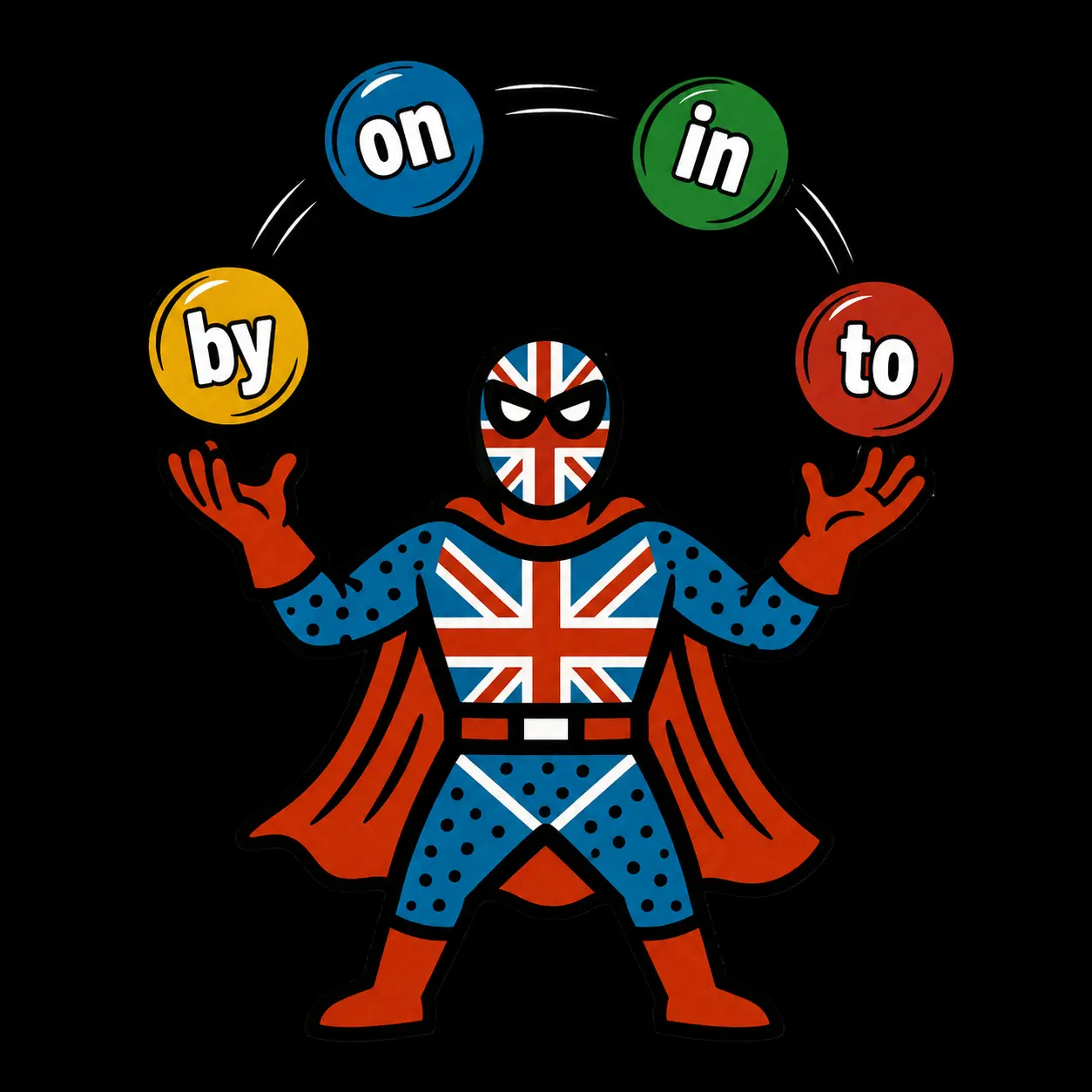
Prepositions in English can feel like a minefield. Why do we say "on the bus" but "in the car"? Or "at the concert" but "on Zoom"?
Instead of trying to memorize hundreds of dictionary rules, you only need to remember 10 golden rules. Once you lock these patterns into your brain, choosing the right preposition becomes second nature.
Here are 10 essential preposition rules to remember—with 4 clear examples for each to highlight exactly how they work in real spoken English.
📖 10 Golden Preposition Rules
1. ON — Technology, Screens & Media
Rule: Use ON for electronic devices, screens, websites, social apps, and digital platforms.
- I read the morning news ON my phone.
- She is currently talking to a client ON Zoom.
- He posted a funny video ON Instagram.
- We watched a great documentary ON TV last night.
2. ON — Public & Ticketed Transport
Rule: Use ON for larger public transport where you step up onto/board and can walk around or stand (buses, trains, planes, ships).
- We listened to a podcast while ON the bus.
- Passengers must stay seated while ON the plane.
- They love traveling ON the train through the countryside.
- They spent a week vacationing ON a cruise ship.
3. AT — Events & Social Gatherings
Rule: Use AT for organized events, parties, concerts, weddings, and functional public gatherings.
- I ran into an old colleague AT the conference.
- They served fantastic food AT the wedding.
- We had a brilliant time AT the birthday party.
- She met up with her friends AT the concert.
4. IN — Enclosed 3D Spaces & Small Vehicles
Rule: Use IN when inside a physical 3D container, room, building interior, or small private vehicle (cars & taxis).
- He left his wallet IN the car.
- She was waiting for me IN the kitchen.
- Put all the old documents IN the box.
- We sat IN the taxi while stuck in heavy traffic.
5. AT — Exact Times & Precise Moments
Rule: Use AT for specific clock times, designated hours, and named meal times.
- The webinar begins AT 3:00 PM sharp.
- Let’s meet for a quick catch-up AT lunchtime.
- He usually gets up AT sunrise.
- The fireworks display started AT midnight.
6. ON — Specific Days, Dates & Holidays
Rule: Use ON for calendar days of the week, exact dates, and named holiday days.
- My job interview is scheduled ON Monday.
- Her birthday is ON October 24th.
- We always open our presents ON Christmas Day.
- What are you planning to do ON Friday night?
7. IN — Months, Years, Seasons & Long Eras
Rule: Use IN for broad time periods such as months, years, seasons, decades, and centuries.
- We usually take our main holiday IN August.
- The business was launched IN 2018.
- It gets quite chilly here IN winter.
- Printing was invented IN the 15th century.
8. TO — Movement, Direction & Destinations
Rule: Use TO when expressing travel, direction, or movement toward a specific destination.
- She walks TO work every morning.
- We are flying TO London next week.
- Please send your completed application TO HR.
- He ran quickly TO the train station.
9. FOR — Duration, Purpose & Beneficiaries
Rule: Use FOR to show a length of time, the reason for an action, or who receives a benefit.
- I have lived in London FOR three years.
- She bought this special gift FOR her sister.
- Regular exercise is great FOR reducing stress.
- We waited FOR 20 minutes outside in the rain.
10. BY — General Transport, Method & Creators
Rule: Use BY for general transport modes (without a/the), methods of contact/payment, or authors/creators.
- He commutes to the office BY train.
- Please submit your feedback BY email.
- This famous novel was written BY Charles Dickens.
- You can pay BY credit card at the checkout.
Mastering these 10 rules will instantly fix 95% of common preposition mistakes in spoken and written English!